
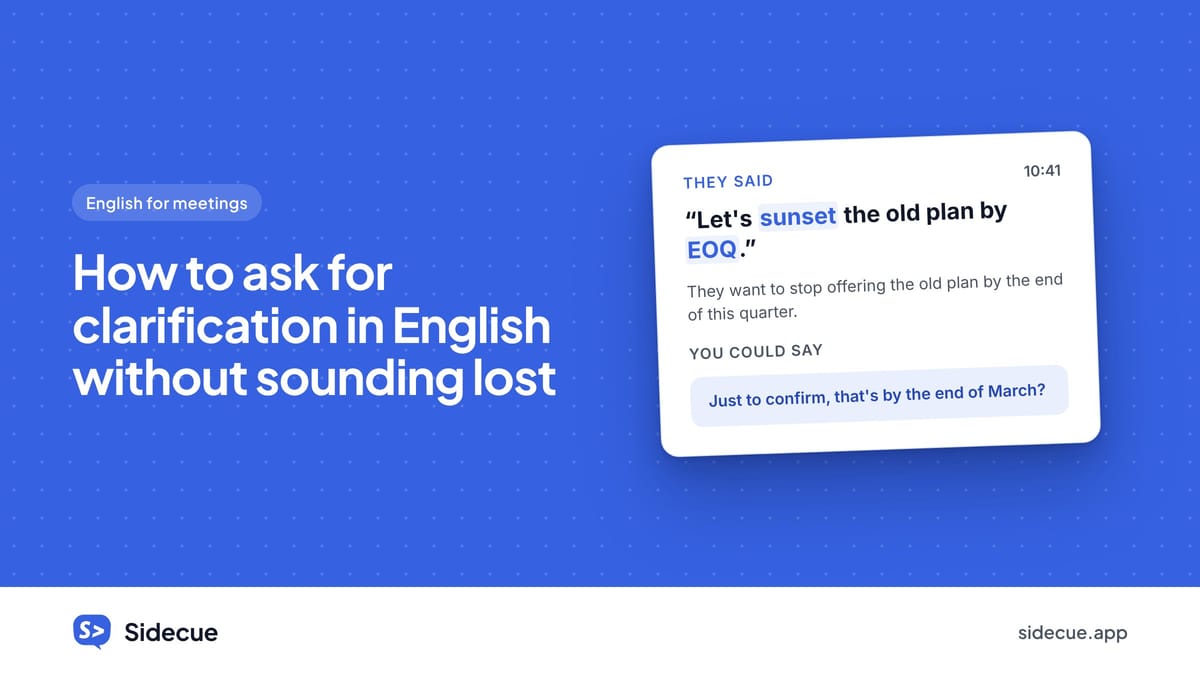
English for meetings5 min read
How to ask for clarification in English without sounding lost
Natural English phrases to ask for clarification in meetings: when you didn't hear, don't know a word, or want to check what someone meant.
Thoughts, stories and ideas.
Natural English phrases to ask for clarification in meetings: when you didn't hear, don't know a word, or want to check what someone meant.

AI meeting assistants do very different jobs. Here they are in four groups: notetakers that join the call, bot-free notetakers, assistants built into Meet, Zoom and Teams, and live help during the call.
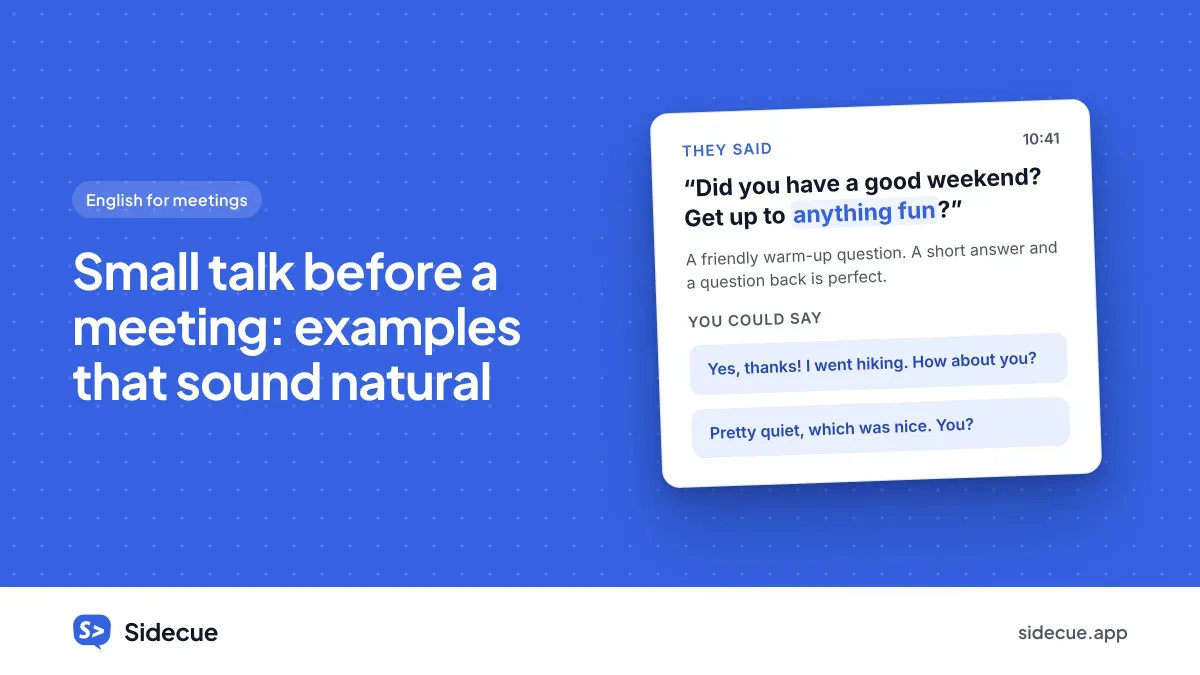
Natural small talk questions and answers for the first minutes of a meeting, safe topics, and how to move smoothly from small talk to business.
Fireflies.ai is a strong team notetaker. Here are the alternatives worth a look, grouped by how you actually meet: with a bot, without one, or with live help during the call.
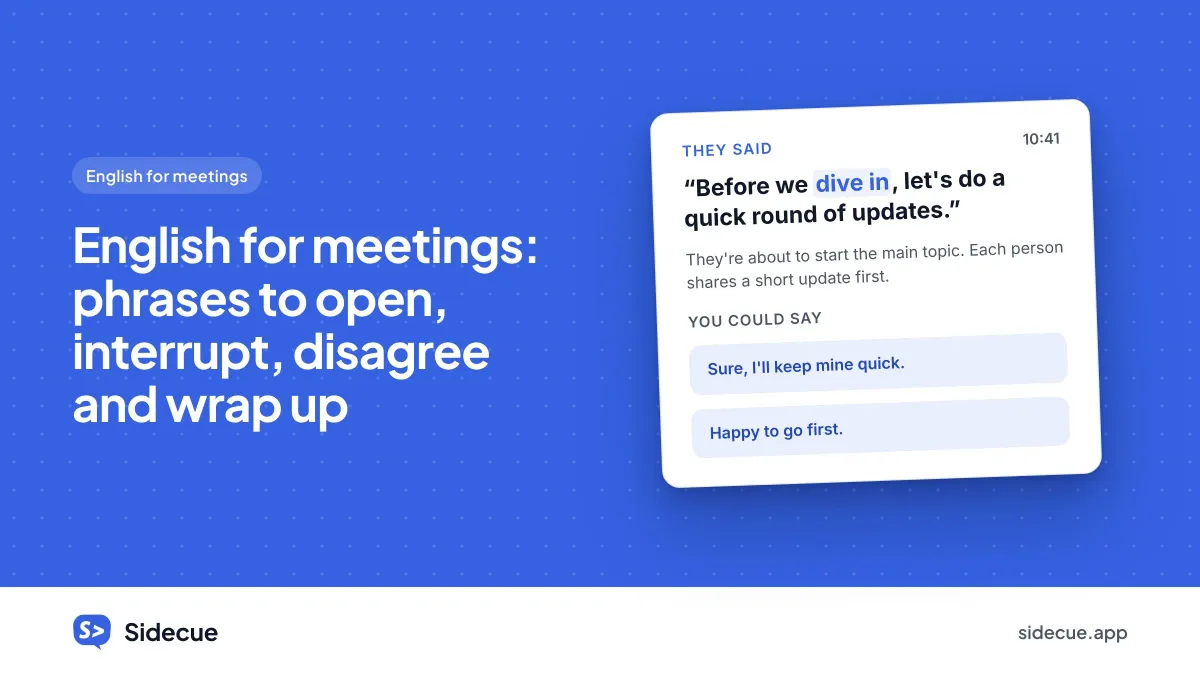
Natural English phrases for every part of a meeting: opening, giving updates, interrupting, agreeing, disagreeing politely and wrapping up.
The main Otter.ai alternatives sorted by what they do: notes after the call, notes without a bot, or live help while you talk.

Google Meet has two built-in translation features: translated captions and speech translation. Here's what each does, who can use it, how to turn it on, and where it falls short.
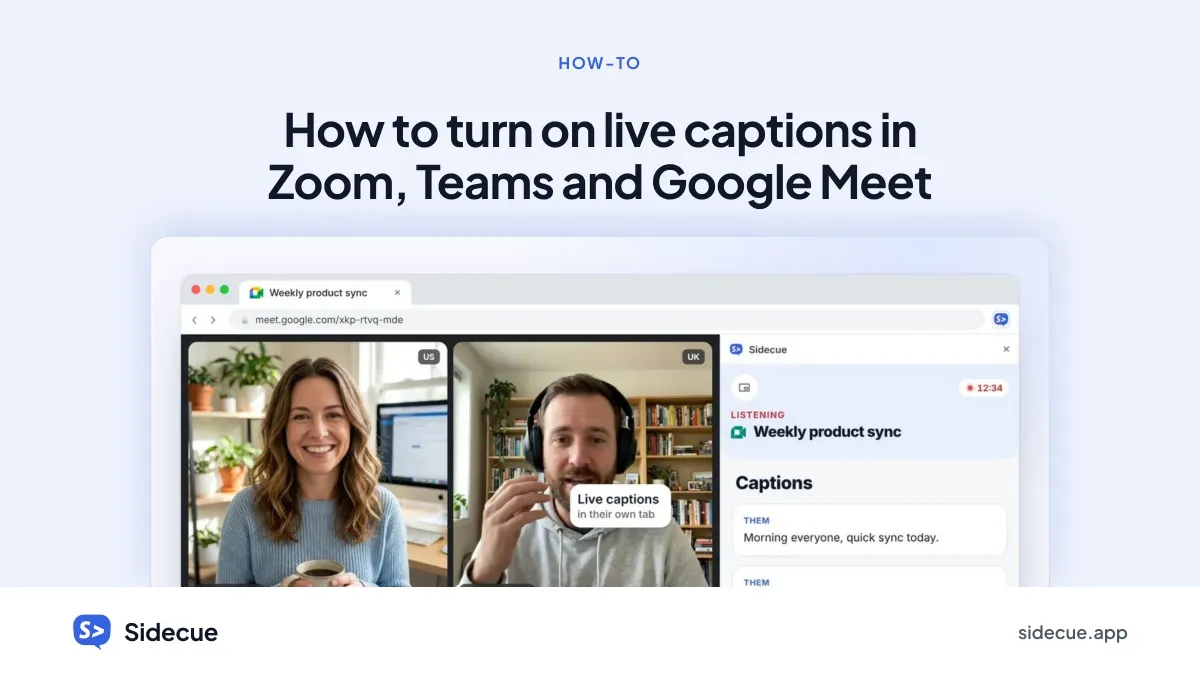
Step-by-step instructions for turning on live captions in Zoom, Microsoft Teams and Google Meet, how to change the caption language, and what translated captions need.
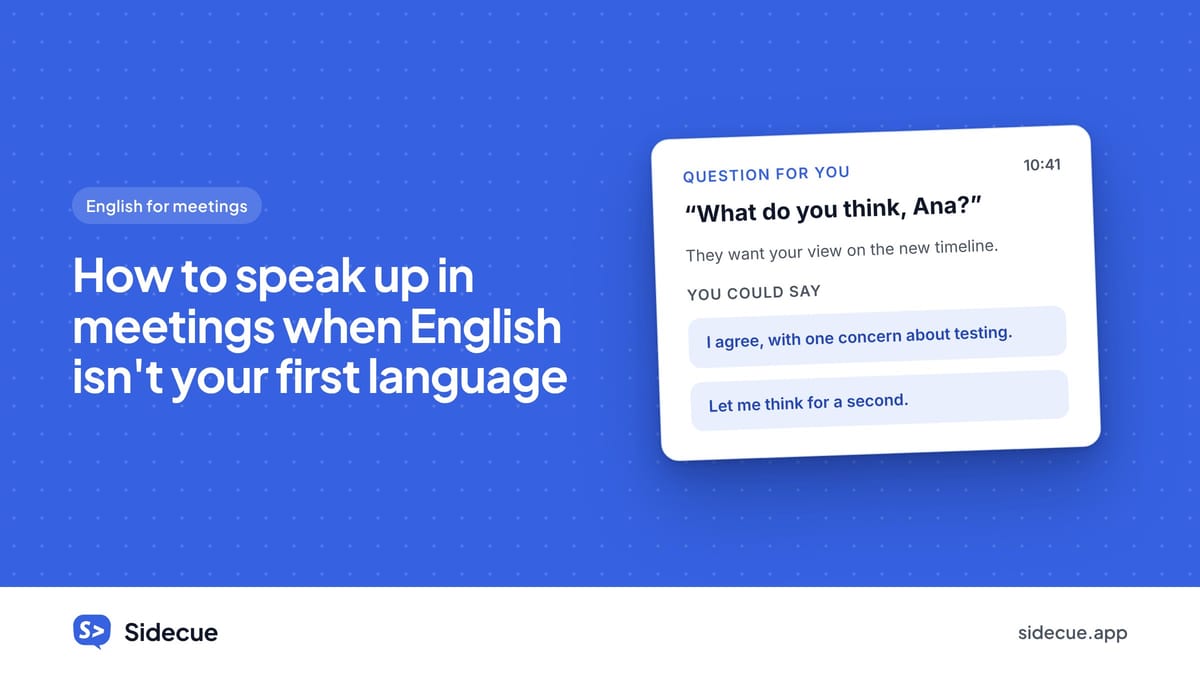
Practical ways to join the conversation, buy time, disagree politely and answer questions on the spot when you work in your second language.
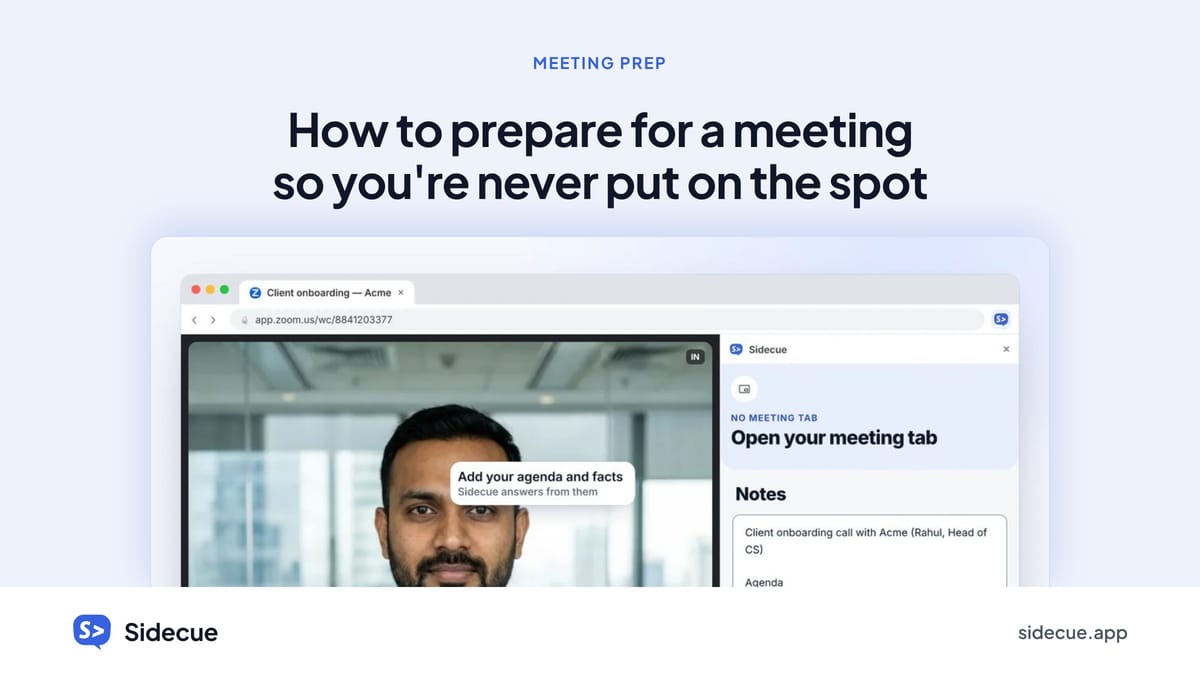
A practical way to prepare for meetings: guess the questions you'll get, write one-line answers, and keep your facts where you can see them during the call.
A short, practical meeting preparation checklist you can copy: what to do the day before, an hour before and ten minutes before any important call.
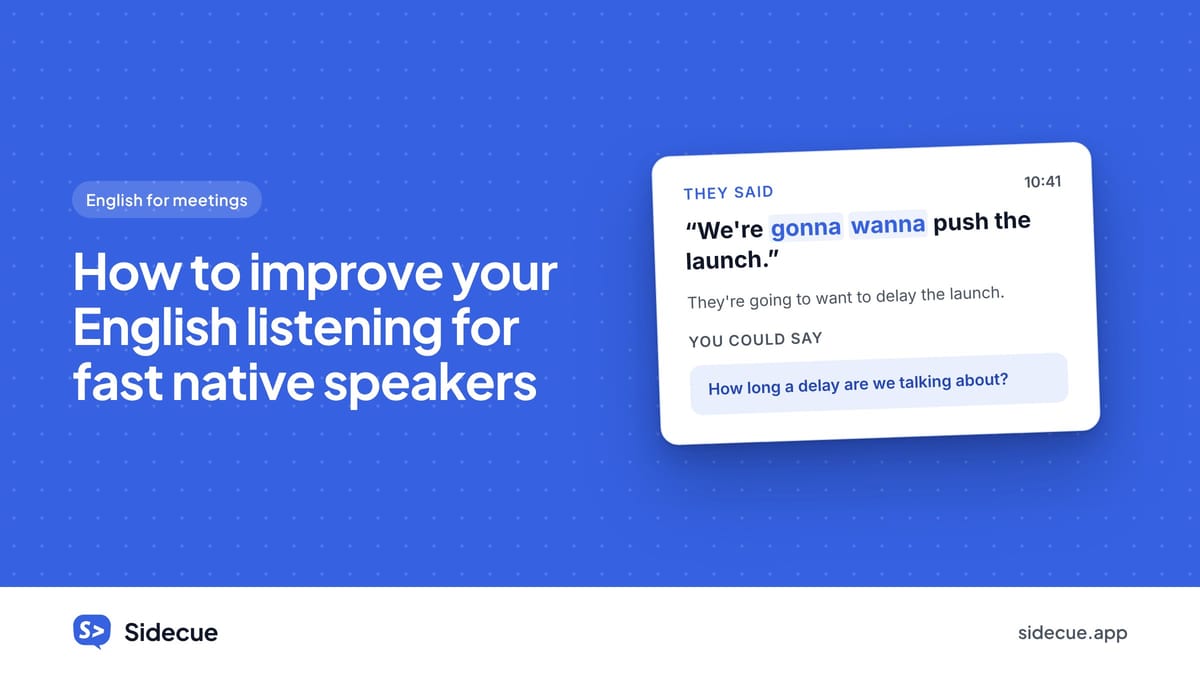
Why native speakers are hard to follow in meetings, and a practical plan to train your ear: reductions, accents, shadowing and what to do in the call itself.