How to ask for clarification in English without sounding lost
Natural English phrases to ask for clarification in meetings: when you didn't hear, don't know a word, or want to check what someone meant.

Michał Włosik
· 5 min read
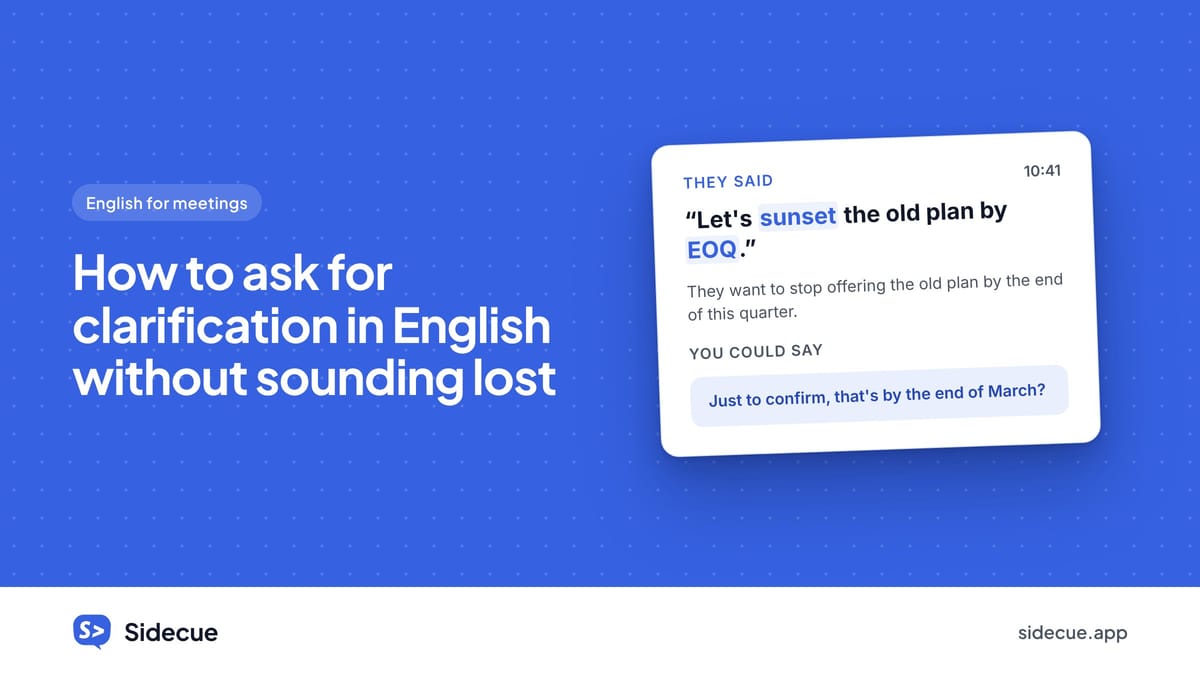
Everyone misses things in meetings. The audio cuts out, someone speaks fast, or a colleague uses an acronym you've never seen. Native speakers ask for clarification all the time. The difference is that they have ready phrases, so it sounds natural instead of anxious.
This guide gives you those phrases, grouped by situation, so you can ask quickly and keep the meeting moving. Asking well doesn't make you look lost. It makes you look careful.
Why asking is a strength
Many non-native speakers stay quiet when they don't understand, hoping it will become clear later. Often it doesn't, and you end up doing the wrong task or agreeing to something you didn't mean to. A quick question takes five seconds. Fixing a misunderstanding can take a week.
There's another benefit: when you ask, other people who were also unsure are grateful. In many meetings, you won't be the only one who didn't know what “EOQ” meant.
When you didn't hear it
Use these when the problem is sound, speed or connection, not vocabulary.
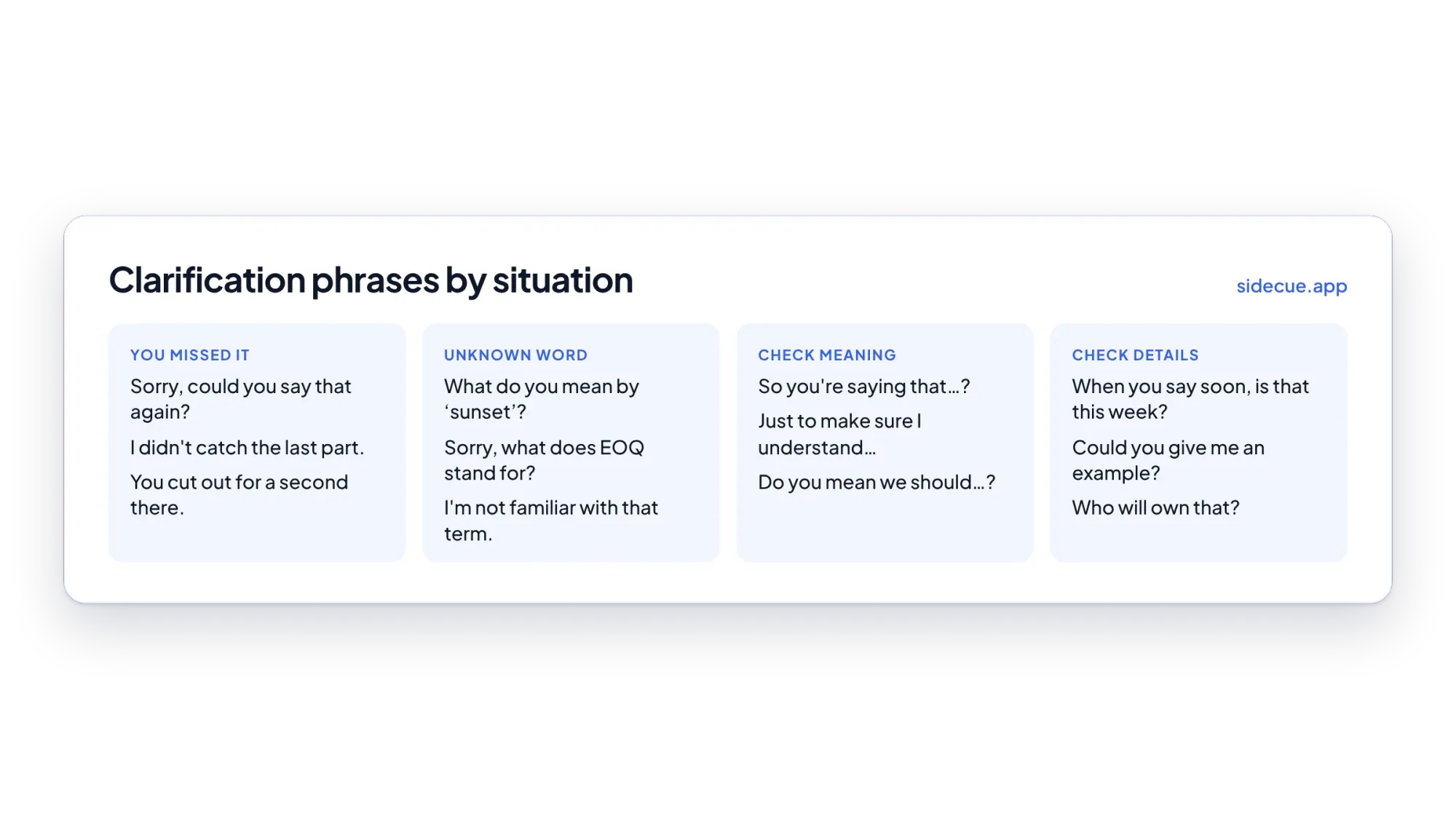
- “Sorry, could you say that again?”
- “Sorry, I didn't catch the last part.”
- “You cut out for a second there. Could you repeat that?”
- “Sorry, the audio was a bit unclear. What was the date?”
- “Could you speak a little more slowly? The connection is patchy on my end.”
Blaming the connection is perfectly acceptable, and on video calls it's often true. Avoid just “What?” or “Repeat, please”. They can sound abrupt.
When you don't know a word or acronym
Business English is full of jargon and acronyms. Name the exact word you don't know, so the speaker can explain just that part.
- “Sorry, what do you mean by ‘sunset’ here?”
- “What does EOQ stand for?”
- “I'm not familiar with that term. Could you explain it?”
- “Is that an internal name? I haven't come across it.”
“Is that an internal name?” is especially useful. Many confusing words are project names or team jargon that new colleagues don't know either. For common idioms, see our list of business idioms you'll hear in meetings.
Checking your understanding
Sometimes you understood every word but aren't sure what the person wants. The best technique is to paraphrase: say back what you think they meant, in your own words.
- “So you're saying that we should delay the launch?”
- “Just to make sure I understand: you'd like the report by Thursday?”
- “If I've got this right, the budget stays the same, but the scope gets smaller?”
- “Do you mean we should start with the UK market?”
- “Let me check I've understood correctly…”
Paraphrasing is powerful because it shows you were listening, and the other person can correct just the part you got wrong. It's the phrase type native speakers use most.
Checking the details
Vague words like soon, a few or someone cause many misunderstandings. Ask for specifics.
- “When you say soon, is that this week or next?”
- “Could you give me an example?”
- “Who will own that?”
- “Is that a hard deadline, or is there some flexibility?”
- “Roughly how many are we talking about?”
- “Is that your time or ours?” (useful across time zones)
Asking for more detail politely
If the idea is clear but you need more information, these sound curious, not confused:
- “Could you say a bit more about that?”
- “Could you walk me through how that would work?”
- “What would that mean for our team?”
- “How did you arrive at that number?”
An example in a real meeting
Here's how a few clarification phrases work together in a short exchange:
Manager: We need to sunset the legacy plan by EOQ and migrate the top accounts first.
You: Sorry, just to check, by sunset you mean we stop selling it?
Manager: Exactly. No new sign-ups.
You: OK. And EOQ is the end of March?
Manager: Yes, 31 March.
You: Got it. When you say top accounts, roughly how many is that?
Manager: About 40.
Three short questions, and you leave with a clear task: stop sales of the old plan by 31 March and move about 40 accounts first. Without them, you would have had to guess.
Clarifying in the chat
In video calls, the chat is a quiet way to ask without interrupting the speaker:
- “Quick question: what's the link to the doc you mentioned?”
- “Sorry, could someone type the name of that tool?”
- “Is the deadline the 14th or the 15th?”
Names, numbers, links and dates are much easier to read than to hear, so asking for them in writing is smart, not lazy.
Clarifying after the meeting
If you didn't get a chance to ask, follow up in writing. It's normal and professional.
- “Thanks for today. Just to confirm, I'll send the draft by Friday, and you'll review it on Monday?”
- “Quick question about one point from the meeting: did we agree on the March or April date?”
A short written summary also protects you. If you misunderstood, someone will correct you before you start the work.
Phrases to avoid
- “I don't understand.” Correct, but it doesn't tell the speaker what to repeat. Say which part.
- “What?” or “Huh?” Too abrupt in a work meeting.
- “Can you repeat again?” Use “Could you repeat that?” or “Could you say that again?”
- Nodding when you didn't understand. It feels polite, but it often leads to bigger problems later.
British and American notes
- “Sorry?” with a rising tone is a very common British way to ask someone to repeat. Americans more often say “Sorry, what was that?” or “Excuse me?”.
- “Pardon?” is polite but can sound a little old-fashioned in casual meetings.
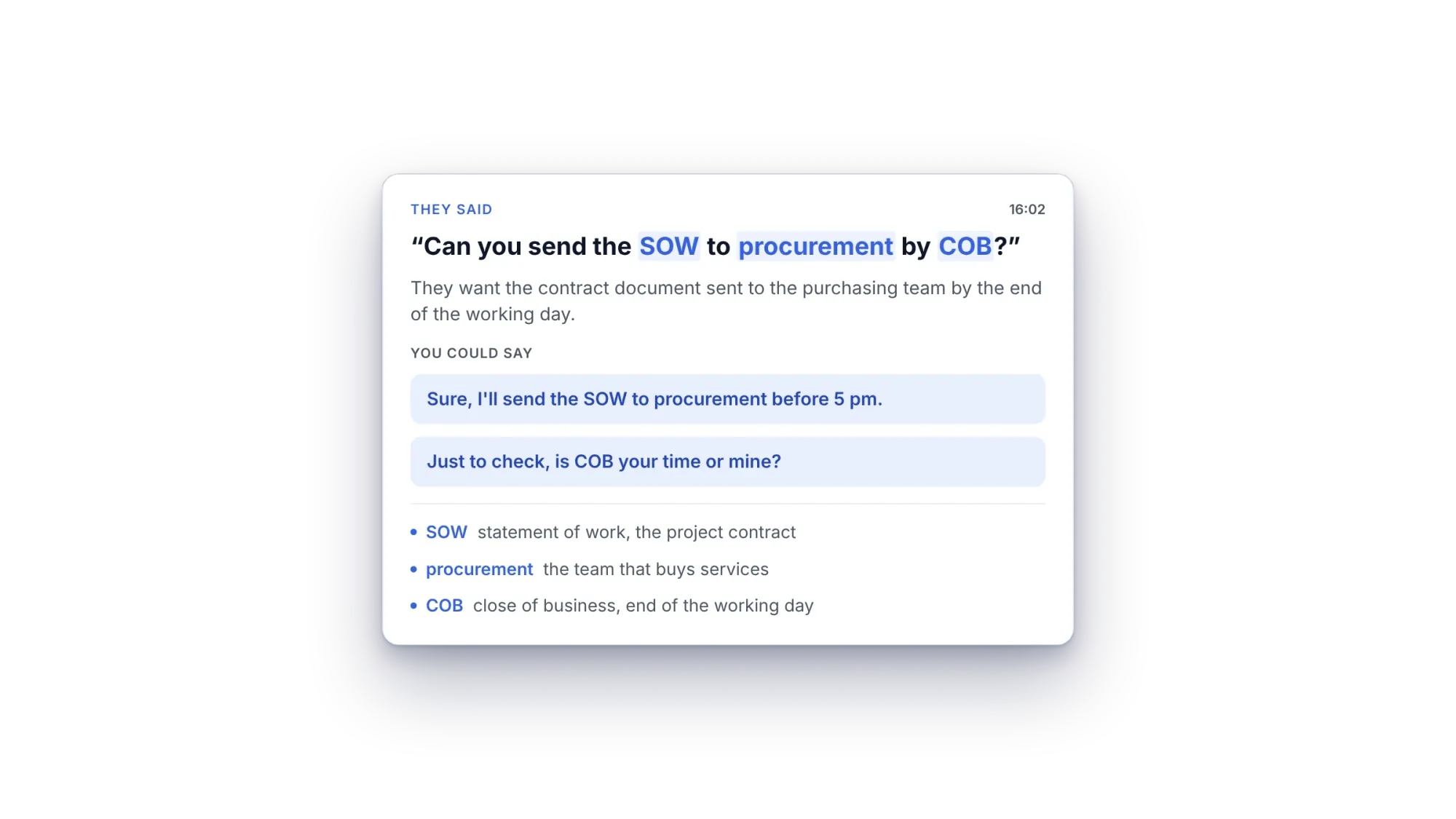
- “COB” (close of business) and “EOD” (end of day) both mean the end of the working day, and both are common in international teams.
See it while they speak
Asking is a great skill, but in fast meetings you can't ask about everything. Sidecue's Language coach runs in Chrome next to Google Meet, Zoom or Teams. A few seconds after someone speaks, it shows their exact words, what they meant, and any jargon or acronyms explained at your level, so you only need to ask about what really matters. The Captions tab keeps a running transcript, which helps when someone speaks fast or the audio is poor.
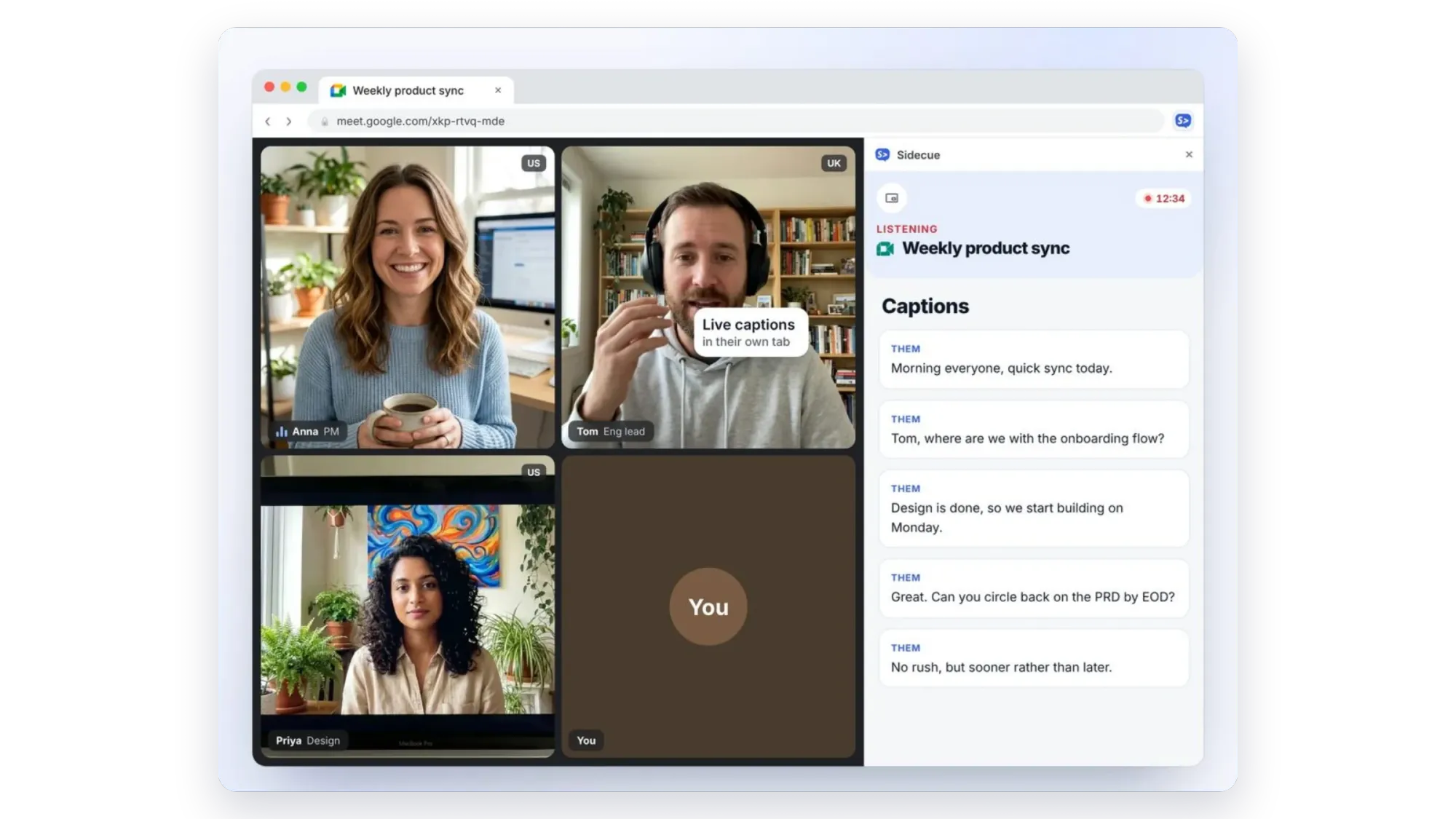
You can read the explanations in your own language, too. Try it first in a practice call. The free plan includes 30 minutes a month.
Add Sidecue to Chrome for free
FAQ
Will asking for clarification make me look unprofessional?
No. Clear, specific questions make you look careful. What looks unprofessional is delivering the wrong thing because you didn't ask.
How many times can I ask someone to repeat?
Once or twice is normal. If you still don't understand, paraphrase what you think they meant, or suggest following up in writing: “Could you drop that in the chat so I get it exactly right?”
How can I understand fast speakers better?
Practise with real meeting audio, learn common reductions like “gonna” and “wanna”, and use captions while you build the skill. Our guide on how to improve your English listening has a step-by-step routine. For the phrases you'll use once you've understood, see English phrases for meetings.
Written by
Questions or thoughts? Share them below.
Keep reading
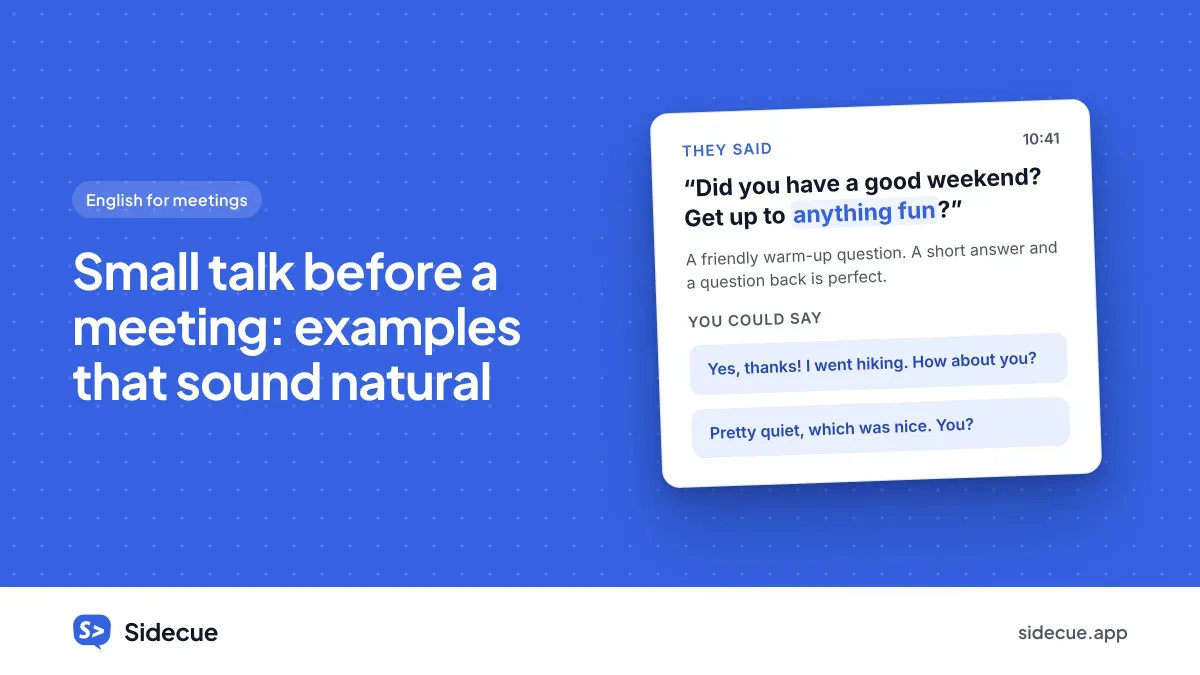
Small talk before a meeting: examples that sound natural
Natural small talk questions and answers for the first minutes of a meeting, safe topics, and how to move smoothly from small talk to business.
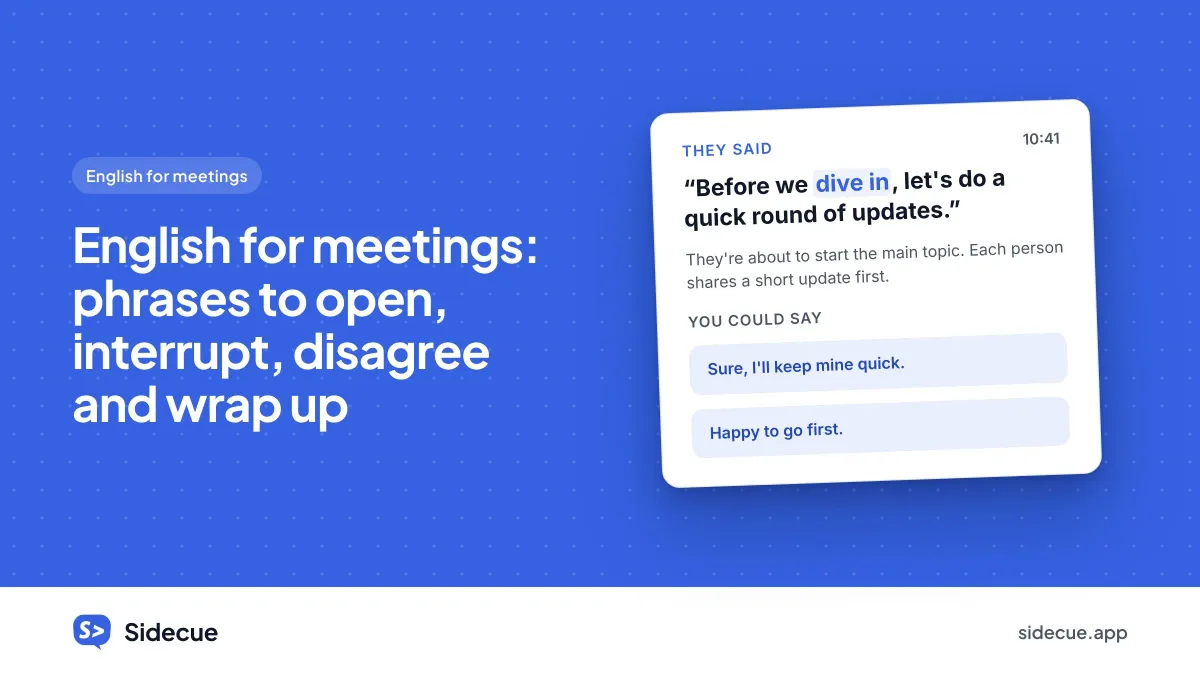
English for meetings: phrases to open, interrupt, disagree and wrap up
Natural English phrases for every part of a meeting: opening, giving updates, interrupting, agreeing, disagreeing politely and wrapping up.
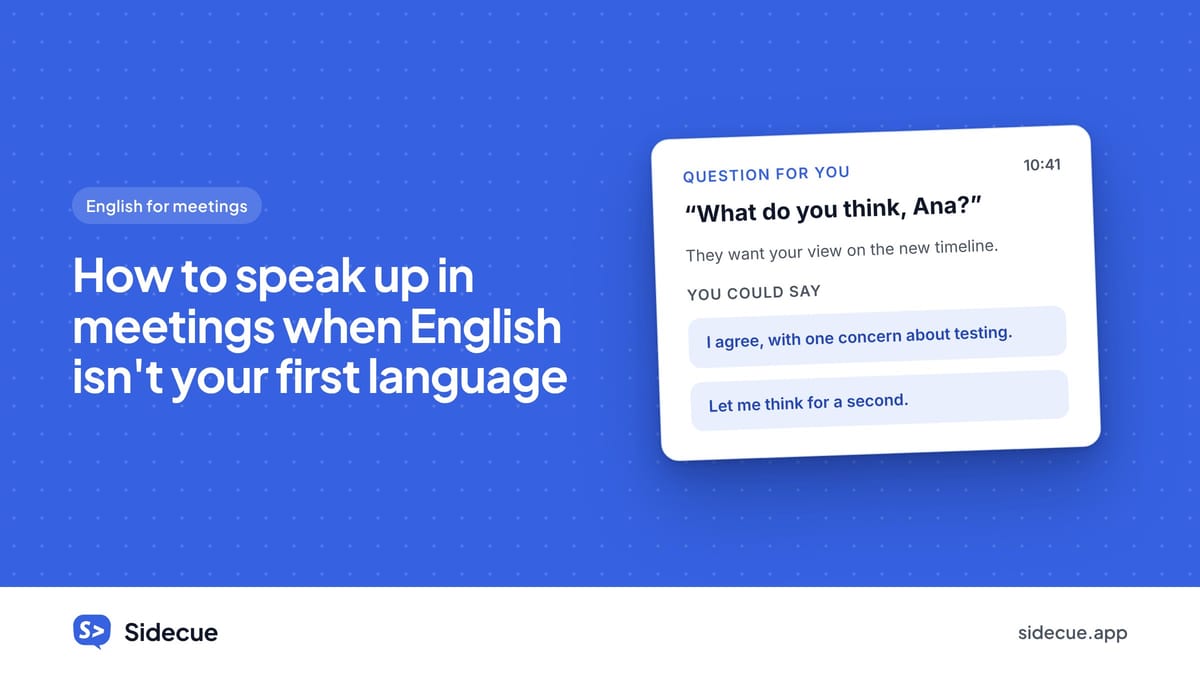
How to speak up in meetings when English isn't your first language
Practical ways to join the conversation, buy time, disagree politely and answer questions on the spot when you work in your second language.