
How to improve your English listening for fast native speakers
Why native speakers are hard to follow in meetings, and a practical plan to train your ear: reductions, accents, shadowing and what to do in the call itself.

Michał Włosik
· 4 min read
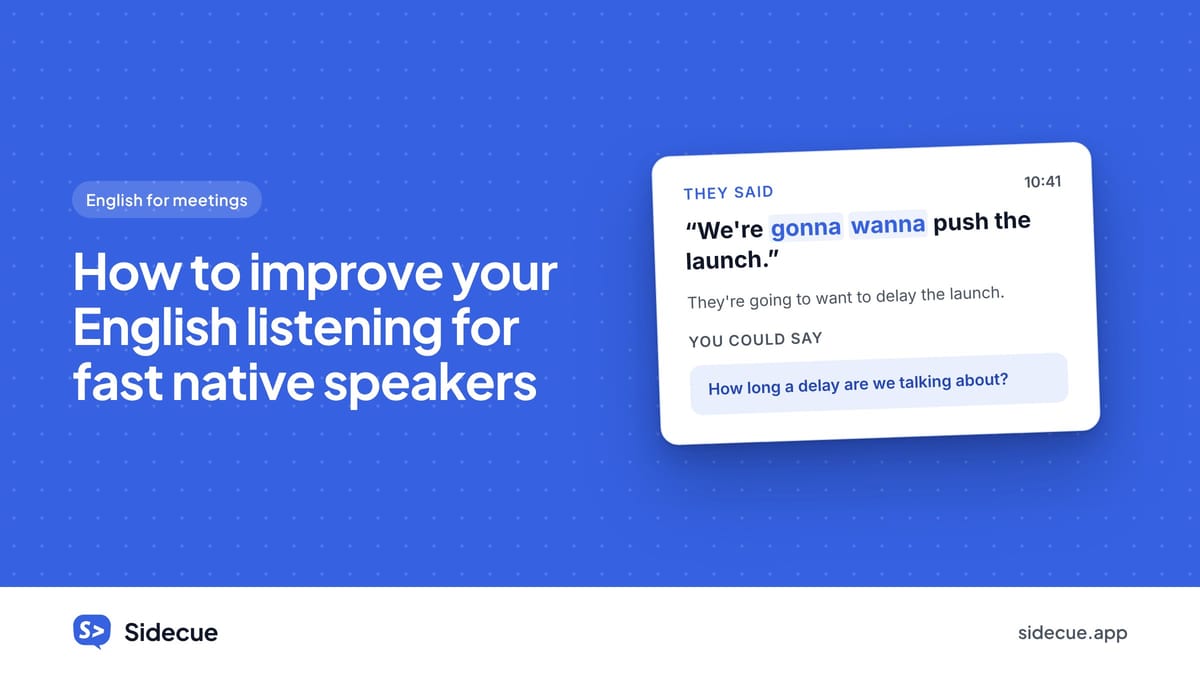
You can read a contract in English, write clear emails and follow a podcast at your own pace. Then a meeting starts, two native speakers talk over each other, and you catch every third word. That gap between reading and listening is normal, and you can close it with the right kind of practice.
This guide explains why fast English is so hard to follow, which sounds to train your ear for, and a short weekly plan you can keep up alongside a full-time job.
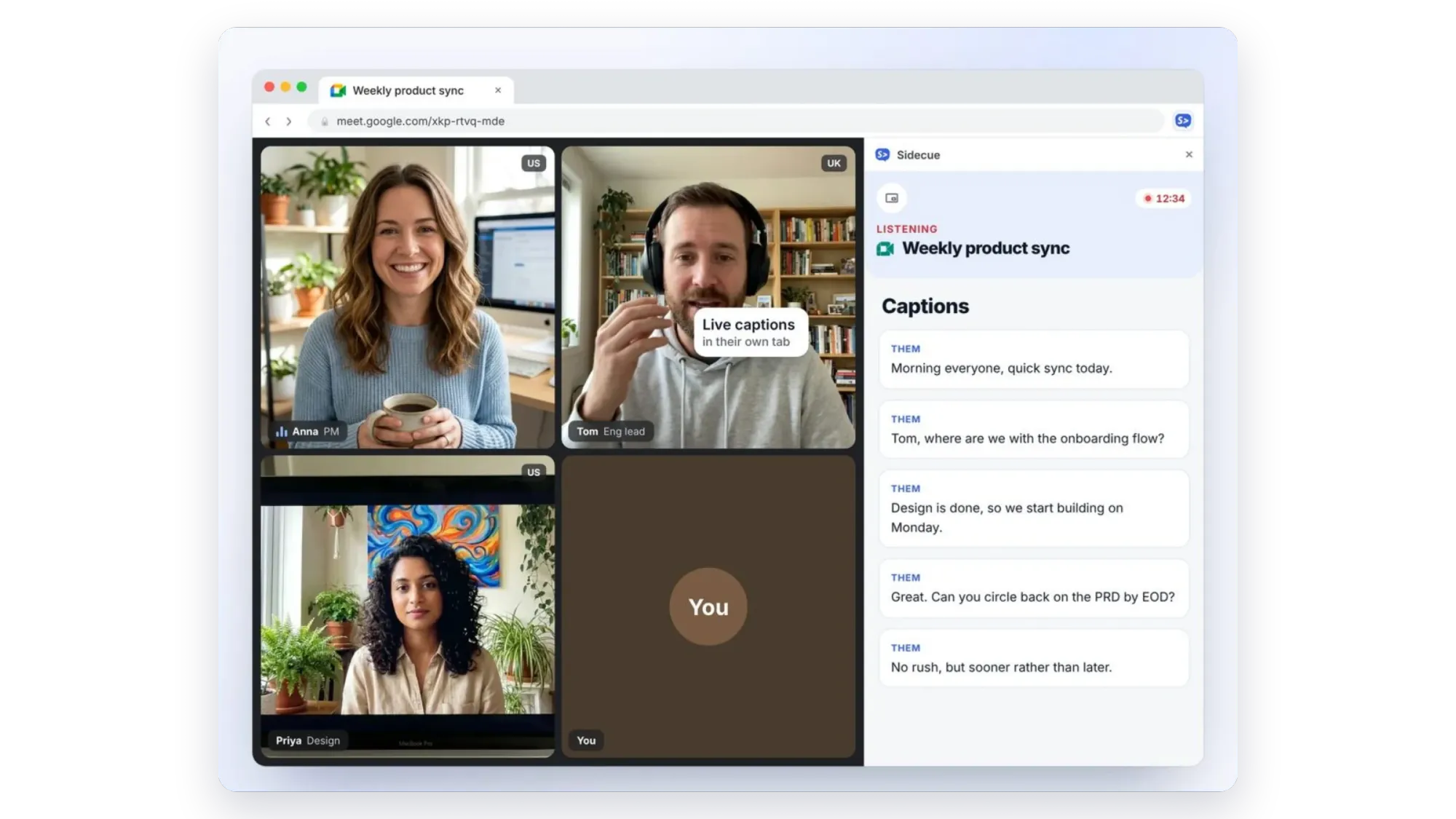
Why fast English is hard to follow
Native speakers don't say words the way textbooks print them. In natural speech, words run together, small words almost disappear, and sounds change at the boundaries. Your brain is listening for “going to”, but what arrives is “gonna”.
Three things make meetings harder than other listening:
- No pause button. A podcast waits for you. A meeting moves on, and the next sentence depends on the last one.
- Several speakers. Different accents, different speeds, and people who interrupt each other.
- Poor audio. Laptop microphones, echo and a weak connection remove exactly the sounds you need.
The fix isn't more vocabulary. It's training your ear for how English really sounds at speed.
The sounds to train your ear for
Reductions
Common phrases shrink in fast speech. You'll hear these in almost every meeting:
- gonna = going to: “We're gonna need more time.”
- wanna = want to: “Do you wanna take this one?”
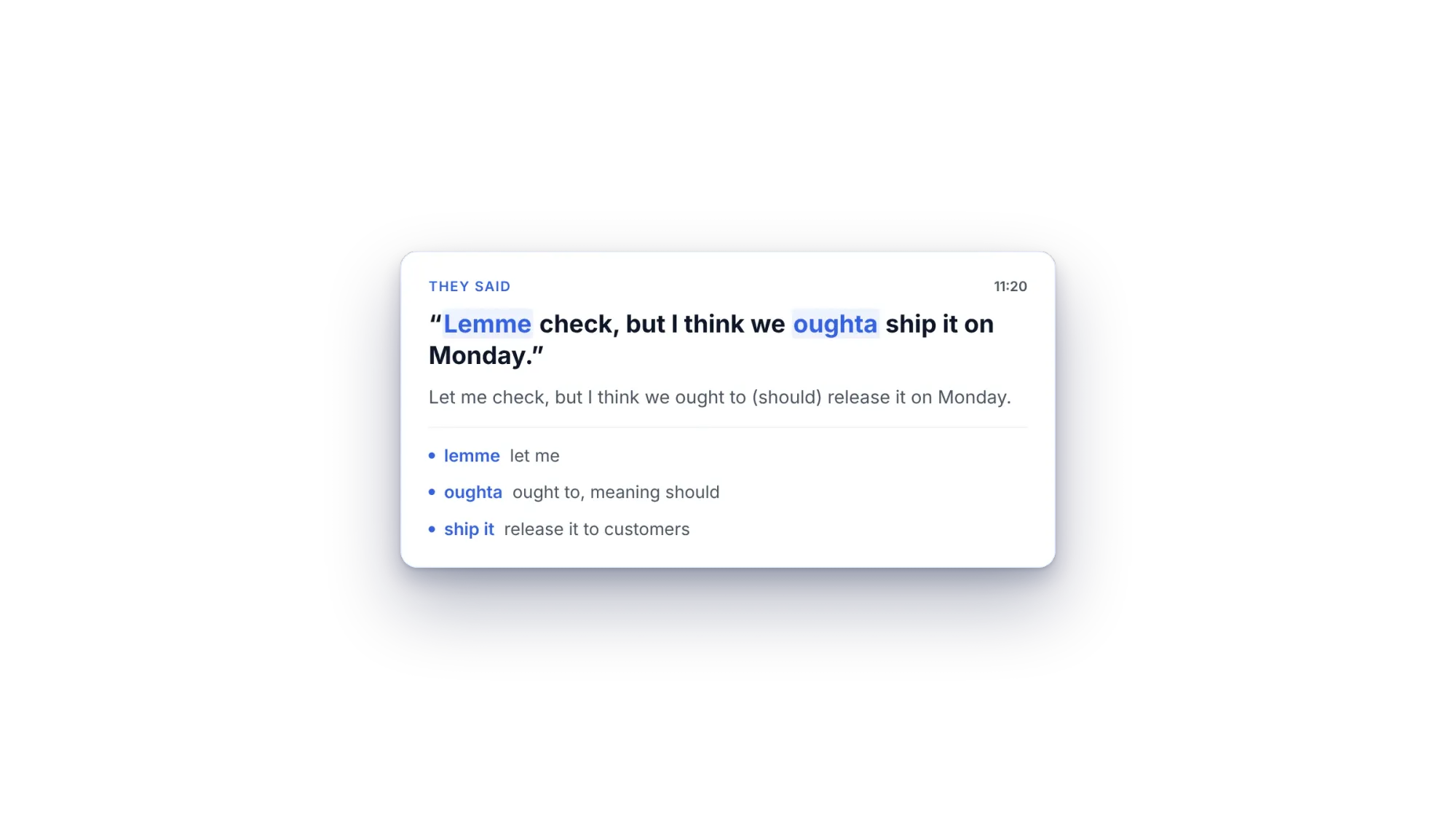
- lemme = let me: “Lemme check with the team.”
- gotta = got to: “We gotta ship this week.”
- kinda = kind of: “It's kinda urgent.”
- oughta = ought to: “We oughta tell the client.”
Linking
Words join when one ends in a consonant and the next starts with a vowel. “Pick it up” sounds like “pi-ki-tup”. “Turn it off” sounds like “tur-ni-toff”. If you only know the words separately, you won't recognise them joined.
Weak forms
Small words like to, for, and, of, can are usually unstressed and shortened. “Cup of tea” becomes “cuppa tea”. “Fish and chips” becomes “fish 'n' chips”. Listen for the stressed words; they carry the meaning.
Accents
Your colleagues may be British, American, Indian, Australian or Nigerian, and each group has its own rhythm. You don't need to master every accent. You need enough exposure that a new one doesn't stop you completely.
A 15-minute weekly listening plan
Short, daily practice works better than a long session once a week. Pick real material: meeting recordings you're allowed to replay, conference talks, or podcasts from your industry.
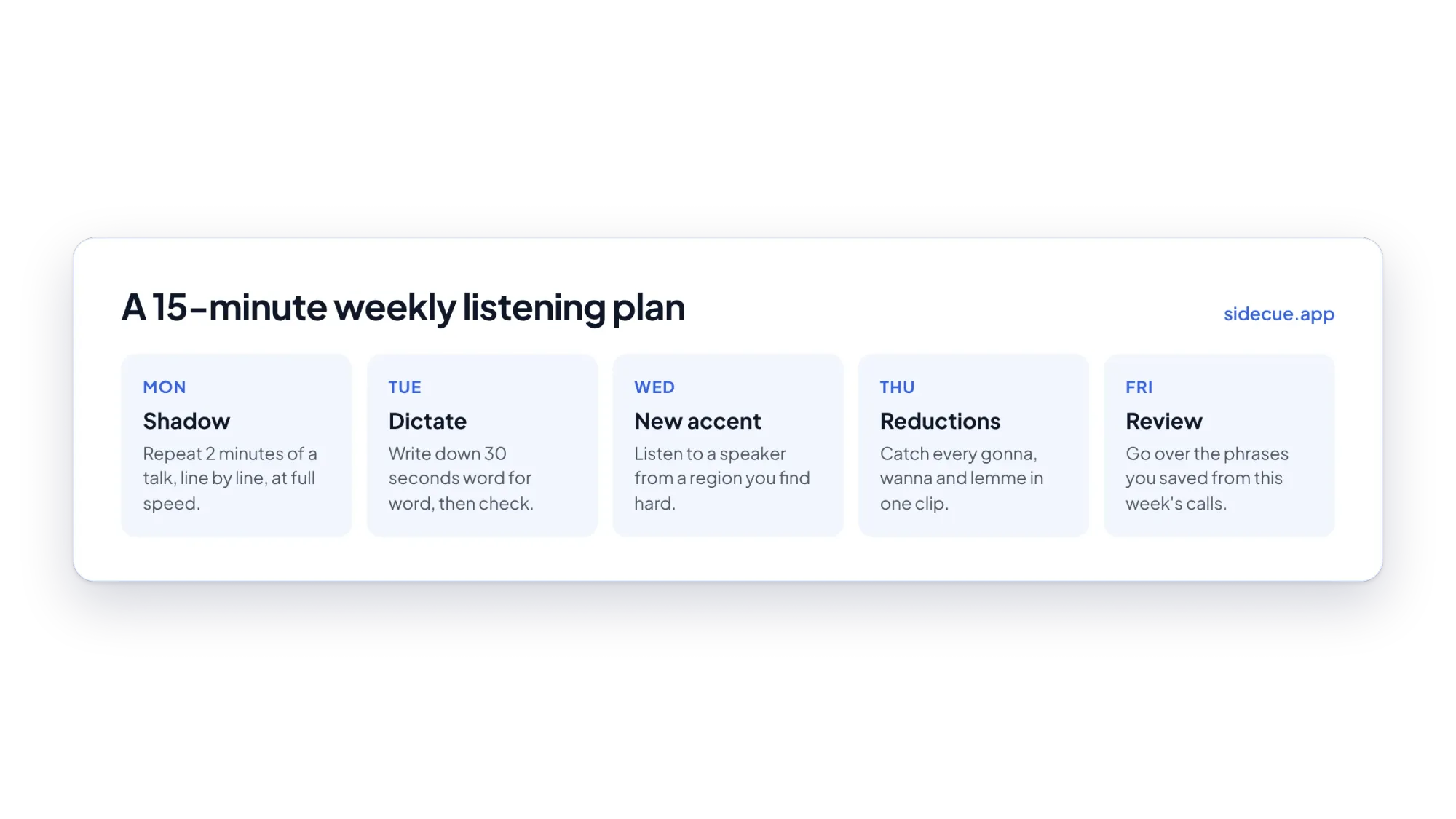
Monday: shadowing
Play two minutes of a talk. Pause after each sentence and repeat it out loud, copying the speed and rhythm. Speaking at native speed teaches your ear to expect it.
Tuesday: dictation
Take 30 seconds of audio and write it down word for word. Then compare with a transcript. The gaps show you exactly which sounds you miss.
Wednesday: a new accent
Listen to someone from a region you find hard. Ten minutes is enough. Over a few weeks, the accent stops feeling strange.
Thursday: reductions hunt
Play a short clip and note every reduction you hear: gonna, wanna, lemme, kinda. Then say each sentence the full way and the fast way.
Friday: review
Go over the words and phrases you didn't catch in this week's meetings. Sidecue's Phrases page keeps them from your calls, so you review real language, not textbook examples.
What to do during the meeting itself
Practice takes weeks. Meetings happen today. These habits help right away:
- Prepare the vocabulary. Read the agenda and any documents first. Knowing the topic makes words easier to recognise. Our guide on how to prepare for a meeting has a full routine.
- Turn on captions. Most platforms have live captions. See how to turn on live captions in Zoom, Teams and Google Meet.
- Use headphones. Laptop speakers lose the quiet consonants that make words clear.
- Ask, don't guess. “Sorry, could you say that again?” is normal in any meeting. Here's how to ask for clarification without sounding lost.
- Listen for the stressed words. If you catch “budget… March… cut”, you have the message even without every word.
Get help during the call
Sidecue's Language coach listens to your meeting tab in Google Meet, or Zoom and Teams in the browser, and shows a running transcript in its Captions tab. When someone says something worth explaining, it shows their exact words, what they meant, idioms and jargon explained at your level, and phrases you could say back. It only listens after you press Start, and no bot joins your call.
It's free for 30 minutes a month. Try it in a practice call first, so you know what to expect before a real meeting.
Add Sidecue to Chrome for free
FAQ
How long does it take to understand fast English?
Most people notice a clear difference after four to six weeks of daily practice. Real progress comes from regular exposure to natural speech, not from studying grammar.
Should I watch with English subtitles?
Yes, in two passes. Watch once with subtitles to understand, then again without them to train your ear. Subtitles in your own language help less, because you read instead of listen.
Why do I understand some people but not others?
Speed, accent and clarity vary a lot. Some speakers reduce more, mumble or talk over others. It's often not your level but their delivery. Asking for a repeat is fair.
Do I need to learn idioms as well?
Yes. Sometimes you hear every word and still miss the meaning. Our list of business idioms you'll hear in meetings covers the common ones, and English phrases for meetings helps you respond.
Written by
Questions or thoughts? Share them below.
Keep reading
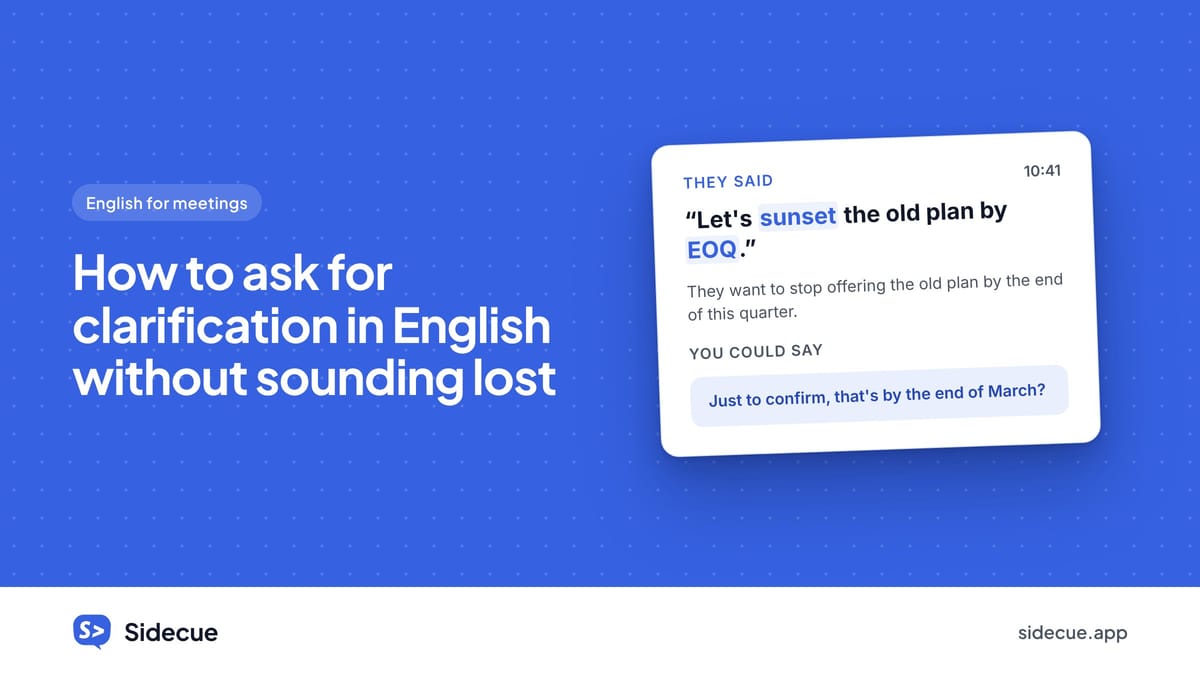
How to ask for clarification in English without sounding lost
Natural English phrases to ask for clarification in meetings: when you didn't hear, don't know a word, or want to check what someone meant.
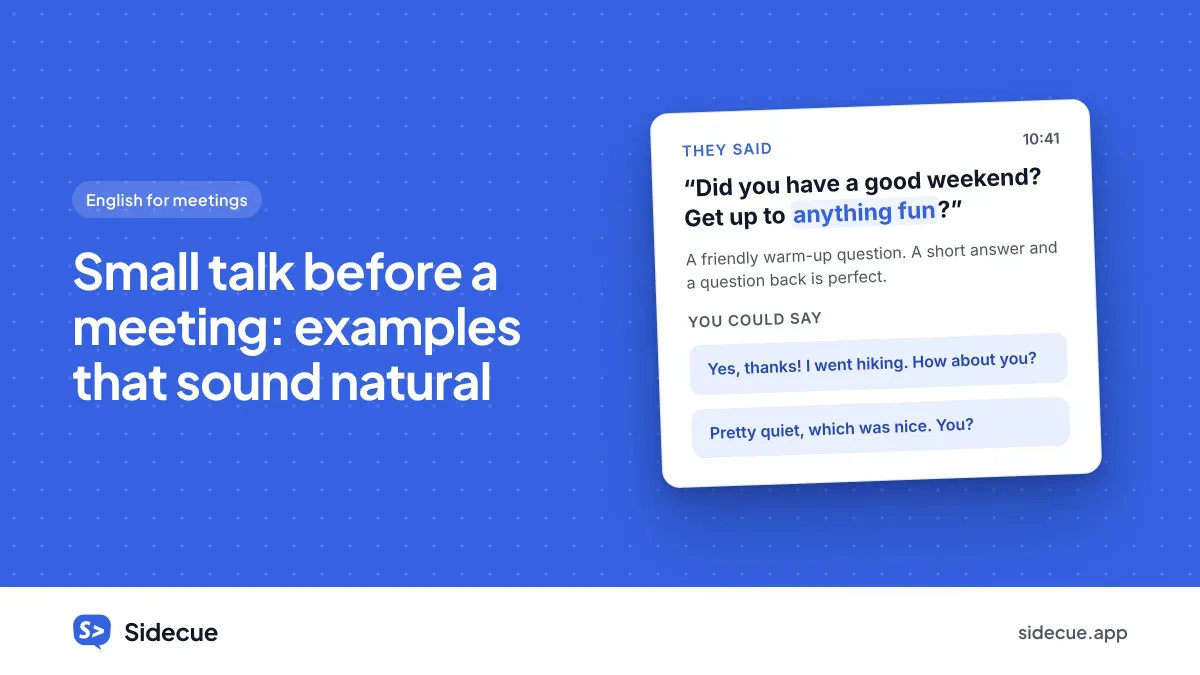
Small talk before a meeting: examples that sound natural
Natural small talk questions and answers for the first minutes of a meeting, safe topics, and how to move smoothly from small talk to business.
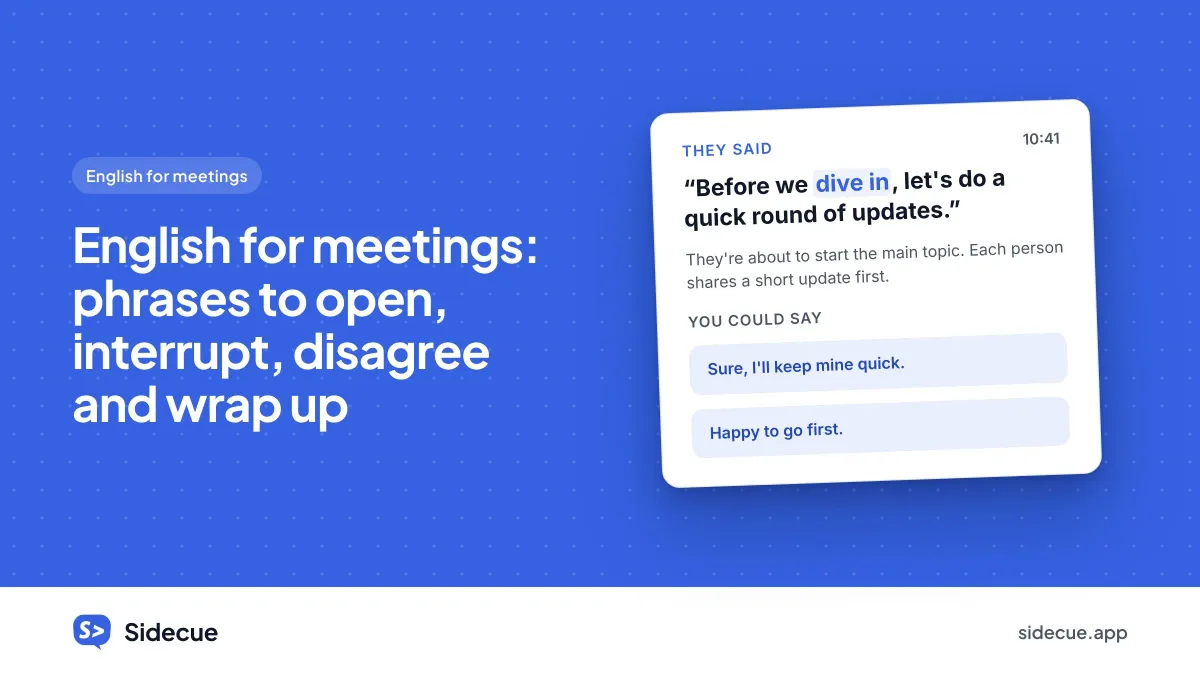
English for meetings: phrases to open, interrupt, disagree and wrap up
Natural English phrases for every part of a meeting: opening, giving updates, interrupting, agreeing, disagreeing politely and wrapping up.