
How to prepare for a meeting so you're never put on the spot
A practical way to prepare for meetings: guess the questions you'll get, write one-line answers, and keep your facts where you can see them during the call.

Michał Włosik
· 4 min read
Being put on the spot rarely happens because you don't know your work. It happens because the right number, date or name isn't in your head at the moment someone asks. The fix is simple: prepare for the questions, not just the topics.
Here's a method that takes 15 to 20 minutes and works for status meetings, client calls and reviews.
Step 1: Know why the meeting exists
Read the invite and the agenda, then write one sentence: “After this meeting, we will have…”. A decision, a date, an approval, a plan. If you can't write that sentence, ask the organiser before the call. People ask sharper questions when the goal is clear, and you can predict them better too.
Also look at who is invited. A finance lead will ask about cost. A manager will ask about timing and risk. A client will ask what they get and when.
Step 2: Predict the questions
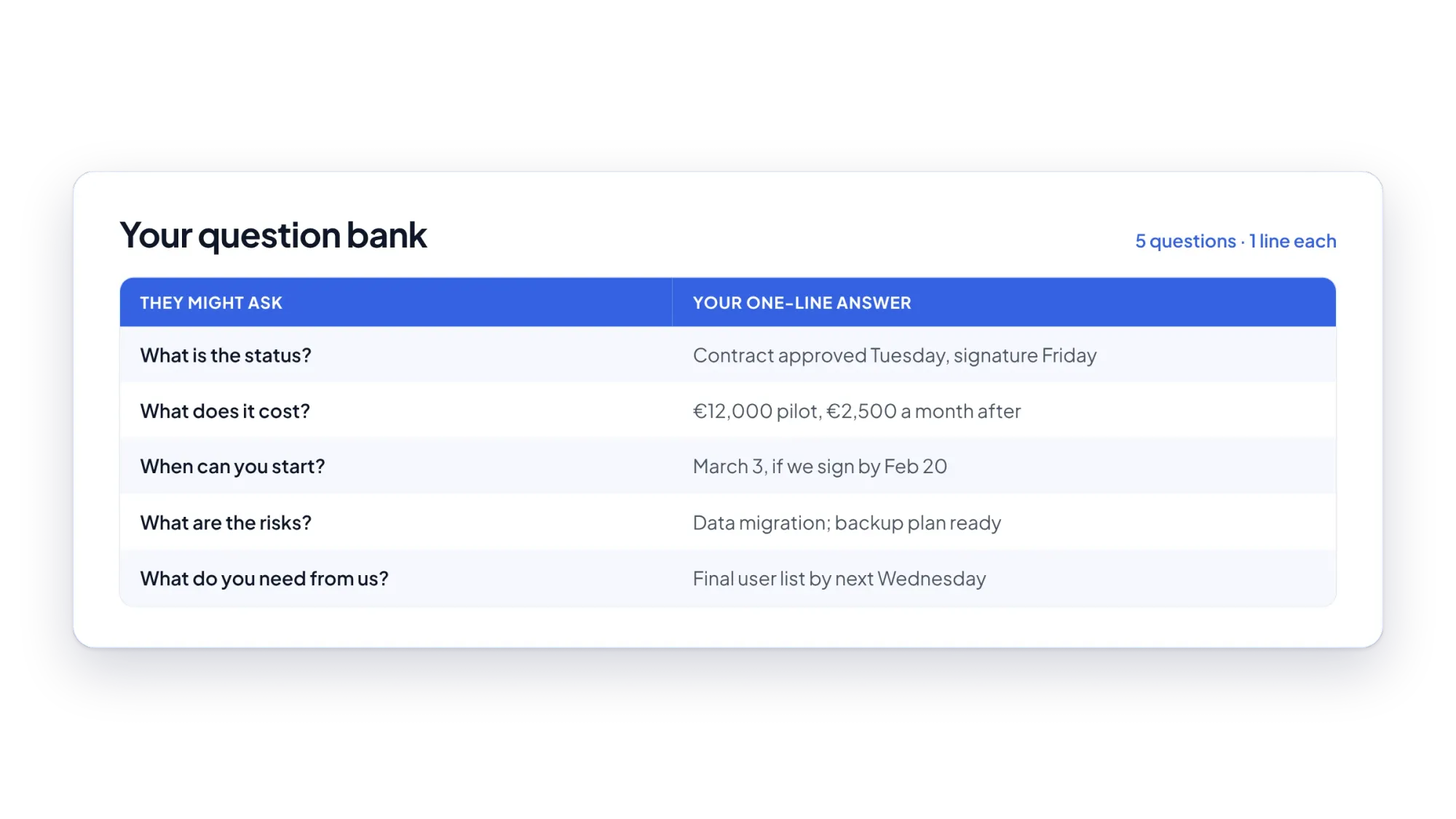
Most questions in work meetings come from five groups. Write at least one question for each that someone could realistically ask you:
- Status: “Where are we with the contract?”
- Numbers: “How many users signed up last month?”
- Timing: “When can we start?”
- Risk: “What could delay this?”
- Next steps: “What do you need from us?”
Look at the last meeting's notes and emails too. Questions that were left open last time are the ones most likely to come back.
Step 3: Write one-line answers
For each question, write an answer you could say in one breath, with the real fact in it. “1,240 sign-ups in September, up 18% on August” is a good answer. “Sign-ups are going well” isn't. Short answers are easier to remember, easier to say under pressure, and easier to find in your notes.
If you don't know an answer yet, that's useful too. Either find it before the meeting, or prepare a good holding answer: “I'll confirm the exact figure by email today.”
Step 4: Keep your facts in view
The best preparation fails if your notes are buried in a tab you can't reach. Put the question bank, the agenda and the key files in one place and open it next to the call before it starts.
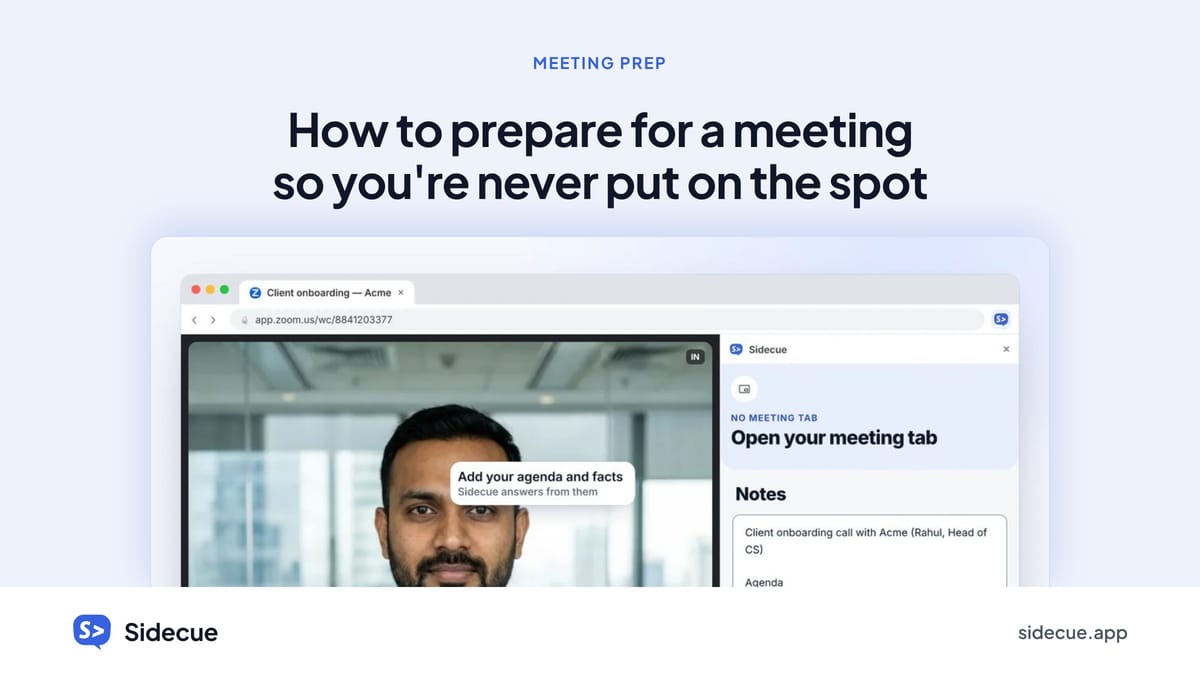
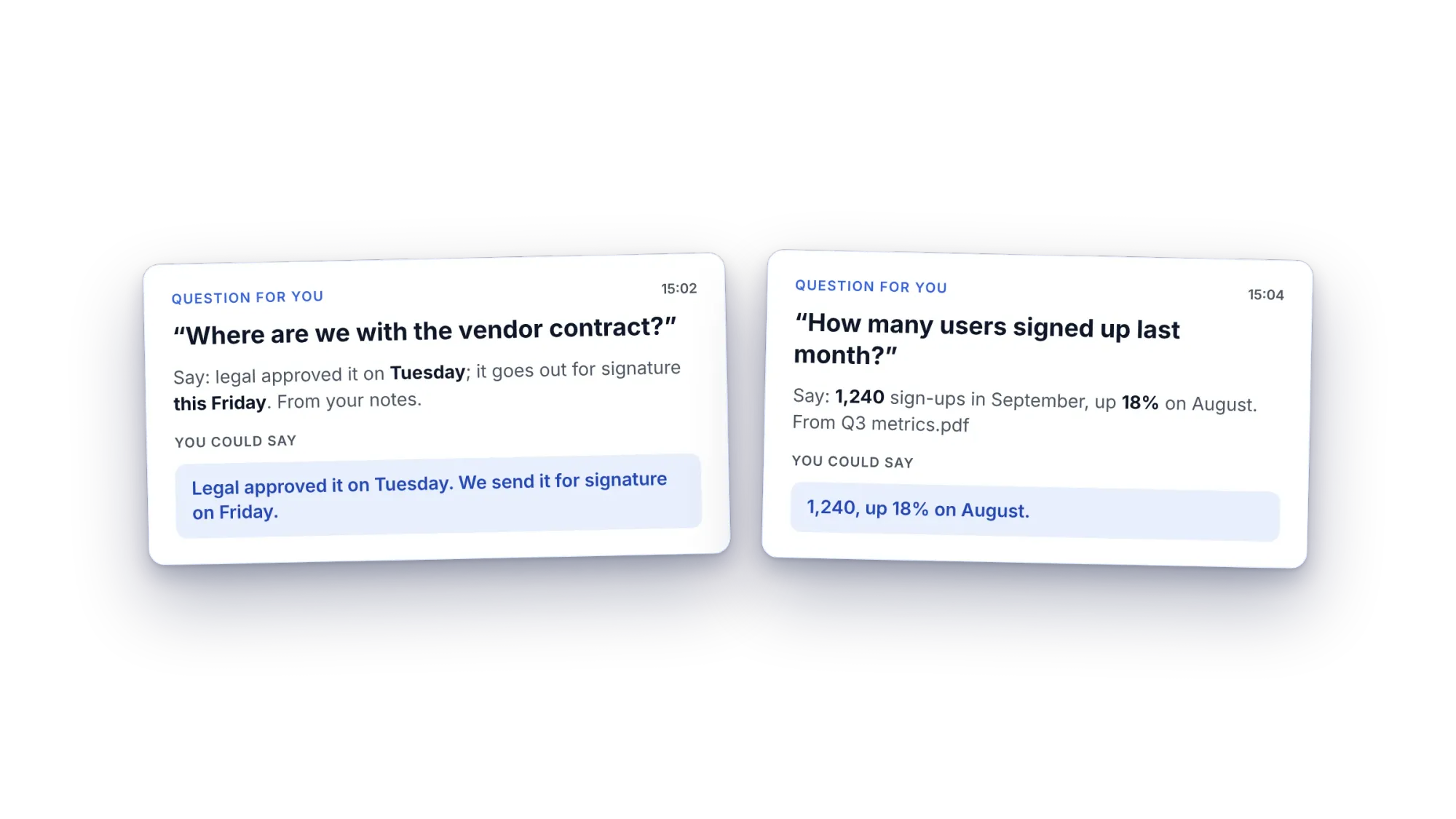
This is the job Sidecue's Meeting coach does during the call. Add your agenda, notes and up to five files before the meeting. When someone asks you a question, Sidecue quotes it and drafts a short answer from your notes, with the key facts in bold. Turn on Stick to my notes to keep answers to your own facts.
Step 5: Rehearse the hard part
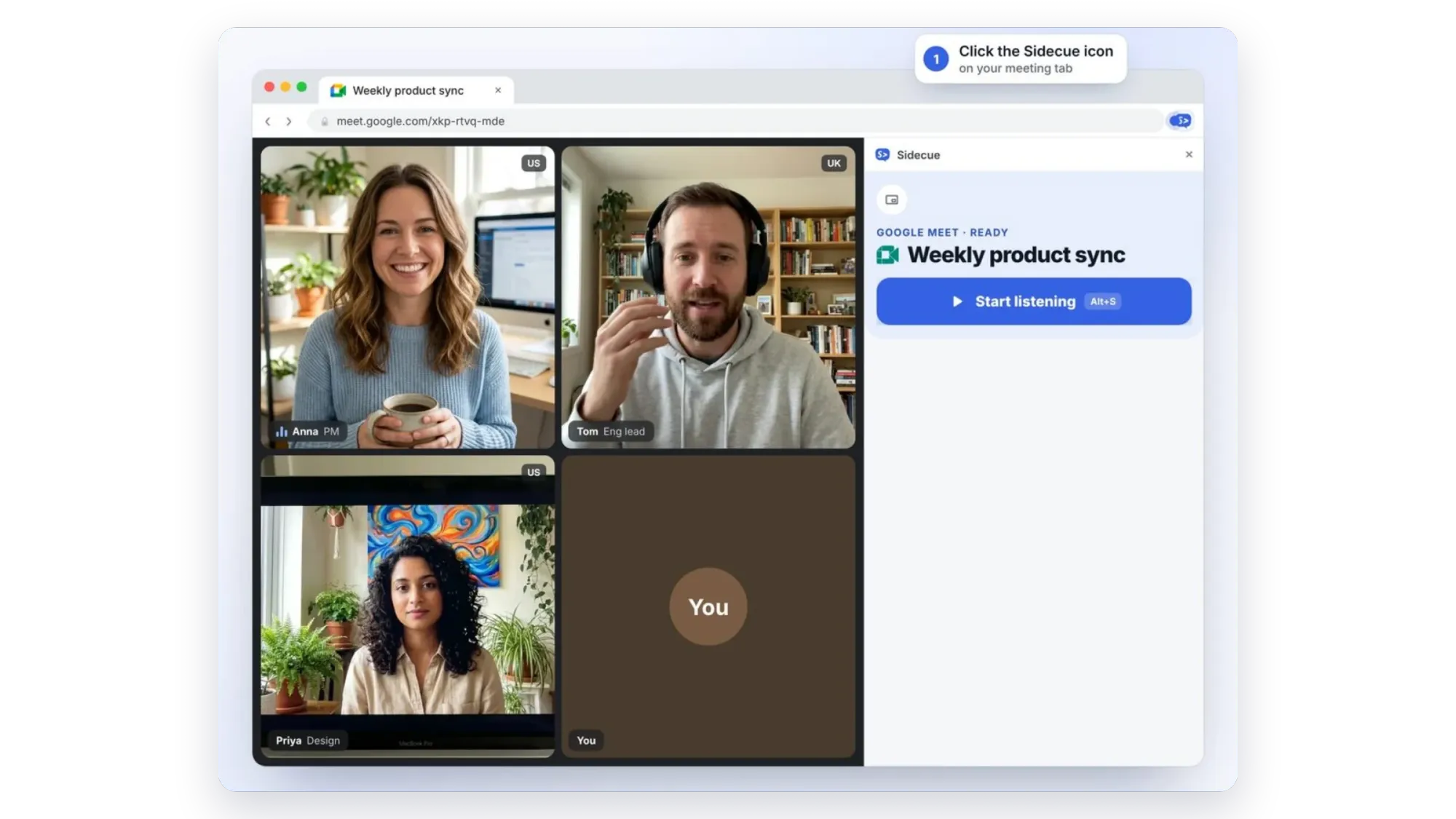
Say your two hardest answers out loud once. It feels odd, but it's the fastest way to find words that don't come easily, especially if the meeting is in your second language. If you use Sidecue, a practice call lets you try the whole thing before the real meeting.
When you still get a surprise question
Even with good preparation, some questions will be new. You don't need a perfect answer on the spot. Use one of these:
- Buy a few seconds: “Good question. Let me check the latest figure.”
- Answer what you know: “I don't have the exact number, but it's around 40 thousand.”
- Commit to a follow-up: “I'll confirm that by email this afternoon.”
- Clarify first: “Do you mean the cost for the pilot, or for the full year?”
Then do what you promised. Following up quickly turns a weak moment into a good impression.
A quick version for busy days
No time for all five steps? Do these three in five minutes: write the meeting's goal, list three questions you might get with one-line answers, and open your notes next to the call. For the full list of steps, use our meeting preparation checklist.
Try it on your next call
Sidecue runs in Chrome next to Google Meet, and next to Zoom and Teams when you join in the browser. No bot joins your call. The free plan includes 30 minutes a month, and Pro is $19 a month. Set it up in two minutes with the user guide.
Add Sidecue to Chrome for free
FAQ
How far in advance should I prepare for a meeting?
Plan the day before and prepare your questions about an hour before. Facts are fresh, and you still have time to find anything that's missing.
What if I'm asked something I can't answer?
Say what you know, and promise a follow-up with a clear time: “I'll send the exact number by 3 pm.” That's a professional answer, not a failure.
Does this help in meetings in a second language?
Yes. Writing answers in advance means you don't have to build sentences under pressure. For more, read how to speak up in meetings when you're not a native speaker, and turn on live captions if people speak fast.
Written by
Questions or thoughts? Share them below.
Keep reading
The meeting preparation checklist (free template)
A short, practical meeting preparation checklist you can copy: what to do the day before, an hour before and ten minutes before any important call.