
How to speak up in meetings when English isn't your first language
Practical ways to join the conversation, buy time, disagree politely and answer questions on the spot when you work in your second language.

Michał Włosik
· 4 min read
You know the answer. You have a useful point. But by the time you've built the sentence in English, the conversation has moved on, and the moment is gone. If that sounds familiar, you're not alone: many experienced professionals stay quiet in meetings simply because they work in their second language.
Speaking up is a skill, not a personality trait. This guide gives you practical tactics and ready-made phrases so you can take part in meetings with less stress.
Why speaking up feels harder in a second language
- Timing. Native speakers jump in during tiny pauses. If you wait for a clear gap, it may never come.
- Translating in your head. Building the sentence takes a few seconds, and in a fast discussion that's too long.
- Fear of mistakes. Worrying about grammar makes you hesitate, even when your English is perfectly clear.
The good news: people care much more about your ideas than your grammar. Clear and short beats perfect and late.
Before the meeting: prepare one contribution
The easiest way to speak up is to arrive with something to say.
- Read the agenda and pick one item where you have a view.
- Write one or two sentences you could say about it, and the key number or fact behind them.
- Predict one question someone might ask you, and draft a short answer.
Our guide on how to prepare for a meeting so you're never put on the spot walks through this in more detail.
Speak in the first ten minutes
The longer you wait, the harder it gets. Say something early, even small: a question, a short agreement, or a fact. Once you've spoken, it's easier to speak again, and others start to include you.
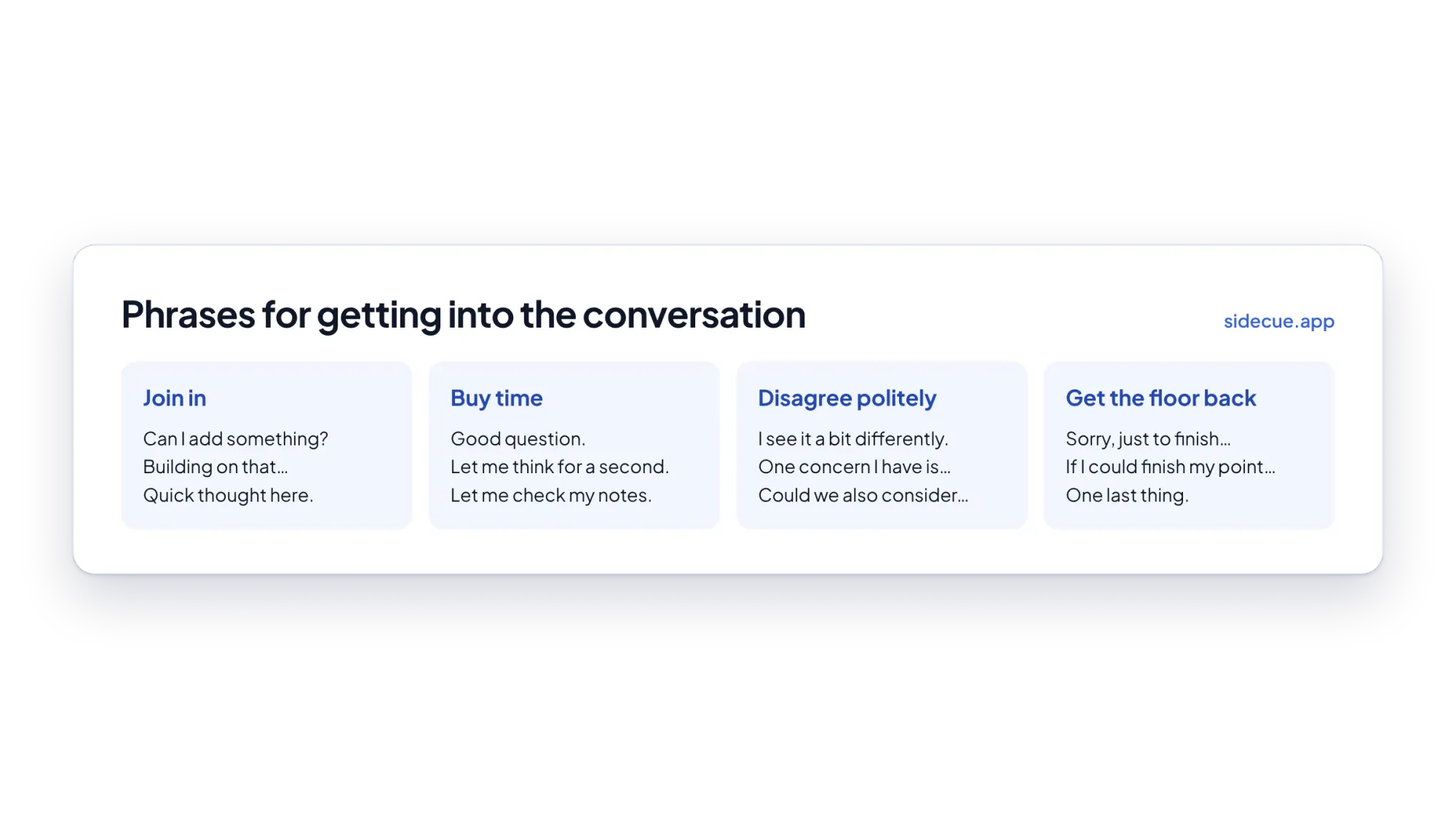
Phrases to join the conversation
Short openers signal that you want to speak and give you a second to organise your thoughts:
- “Can I add something here?”
- “Building on what Tom said…”
- “Quick thought on that.”
- “I'd like to come in on this point.”
Phrases to buy time
When someone asks you a question, you don't have to answer instantly. These phrases are natural and sound confident:
- “Good question. Let me think for a second.”
- “Let me check my notes.”
- “I want to give you the right number, so let me confirm and send it after the call.”
Disagree politely
Disagreeing in a second language feels risky, so many people don't. Softer phrases make it easy:
- “I see it a bit differently.”
- “One concern I have is the timeline.”
- “Could we also consider a smaller first release?”
For more ready phrases, see English phrases for meetings.
When you're interrupted
Getting cut off is common in fast meetings. You can take the floor back politely:
- “Sorry, just to finish my point…”
- “If I could finish quickly…”
- “One last thing before we move on.”
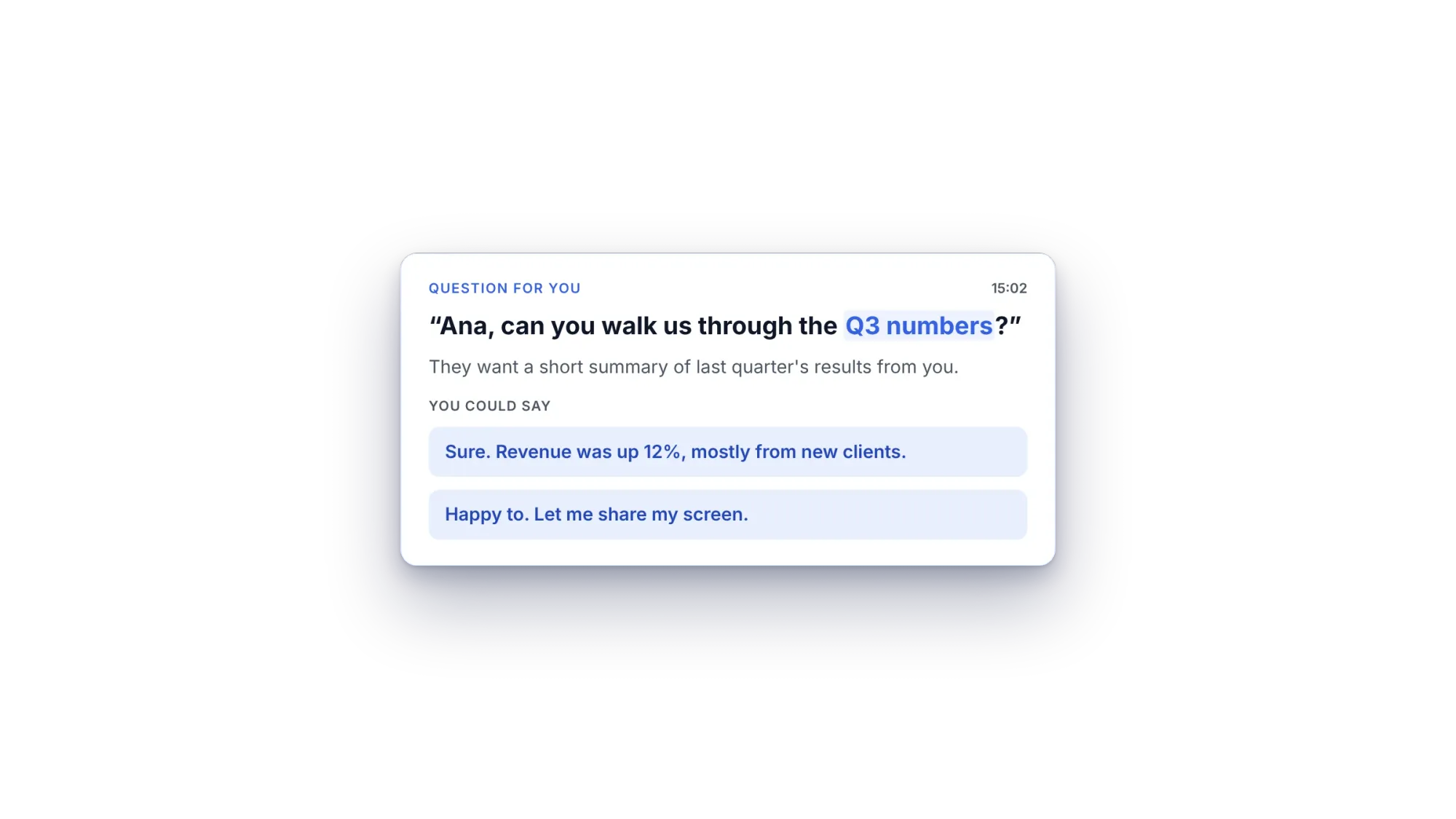
Answering questions on the spot
A simple structure keeps answers short and clear:
- Answer first. “Yes, we're on track.”
- Give one reason or fact. “Testing finished on Friday.”
- Offer more if needed. “I can share the details after the call.”
If you didn't understand the question, ask. “Just to check, are you asking about the budget or the timeline?” is a perfectly good answer. See how to ask for clarification without sounding lost.
Get help during the call
Sidecue sits next to your meeting in Chrome and helps in the moments that matter. Meeting coach spots questions aimed at you and drafts a short answer from your own notes, agenda and files. Language coach explains what people meant and suggests natural phrases you could say back.
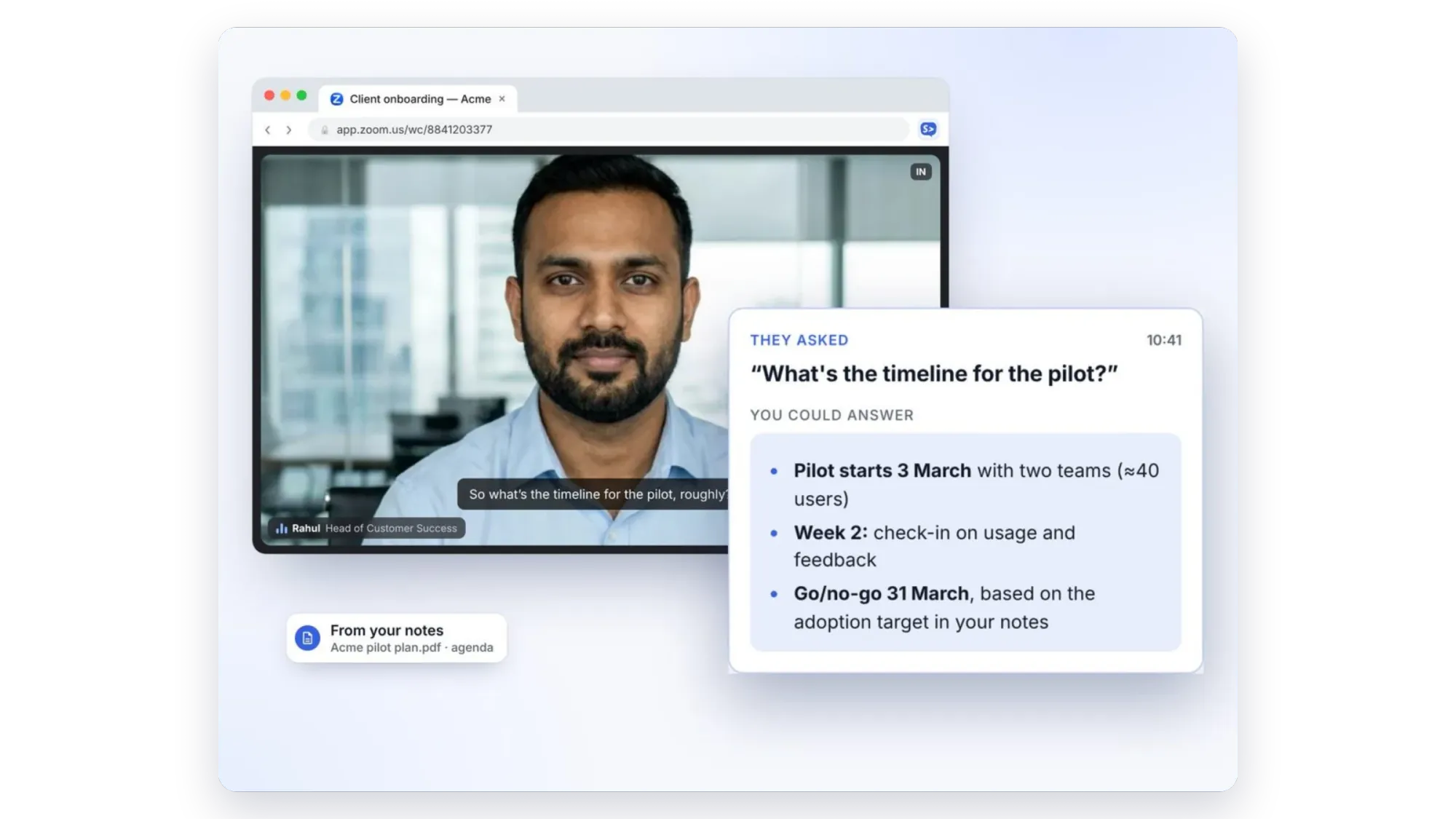
It only listens after you press Start, and no bot joins the call. The free plan includes 30 minutes a month. Try it in a practice call first.
Add Sidecue to Chrome for free
FAQ
Will people judge my accent?
Most international teams are used to many accents. Clear, short sentences matter far more than sounding native. Slowing down slightly helps more than changing your accent.
What if I make a grammar mistake?
Keep going. Small mistakes rarely change the meaning, and nobody remembers them after the meeting. They will remember your idea.
How often should I speak in a meeting?
Aim for at least one contribution in every meeting where you're expected to take part. Quality matters more than quantity: one clear point is better than several unclear ones.
Should I tell my manager I find it hard?
It can help. A good manager can send the agenda earlier, ask for your view directly, or give you time to follow up in writing.
Written by
Questions or thoughts? Share them below.
Keep reading
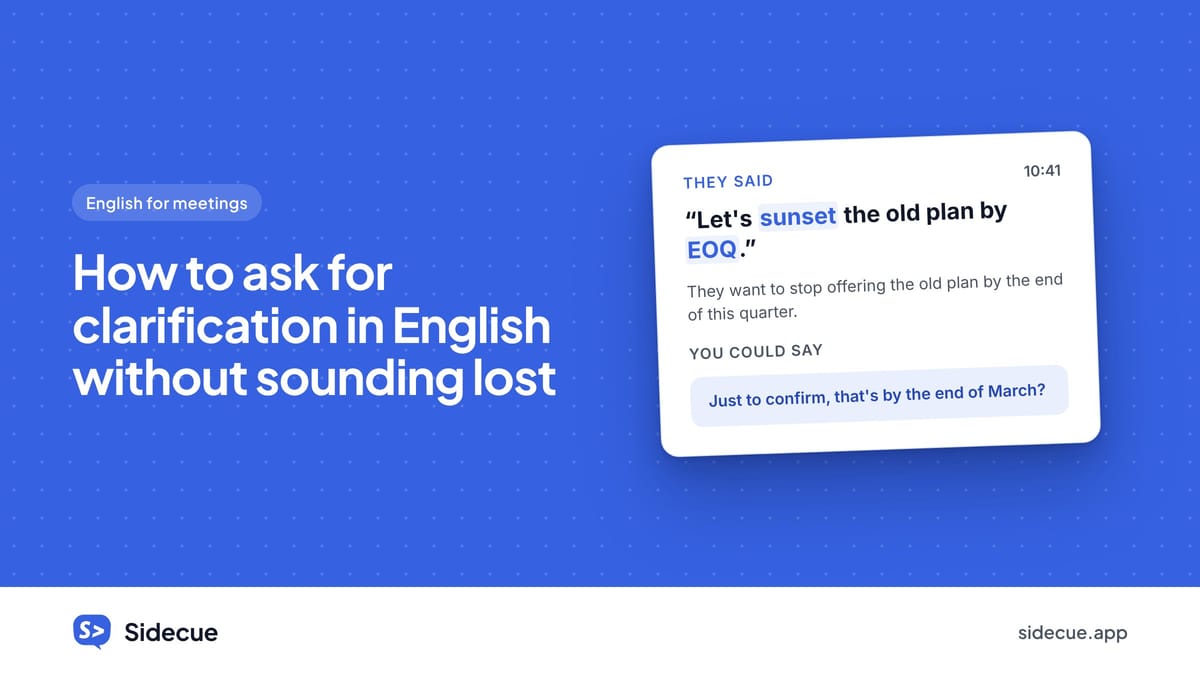
How to ask for clarification in English without sounding lost
Natural English phrases to ask for clarification in meetings: when you didn't hear, don't know a word, or want to check what someone meant.
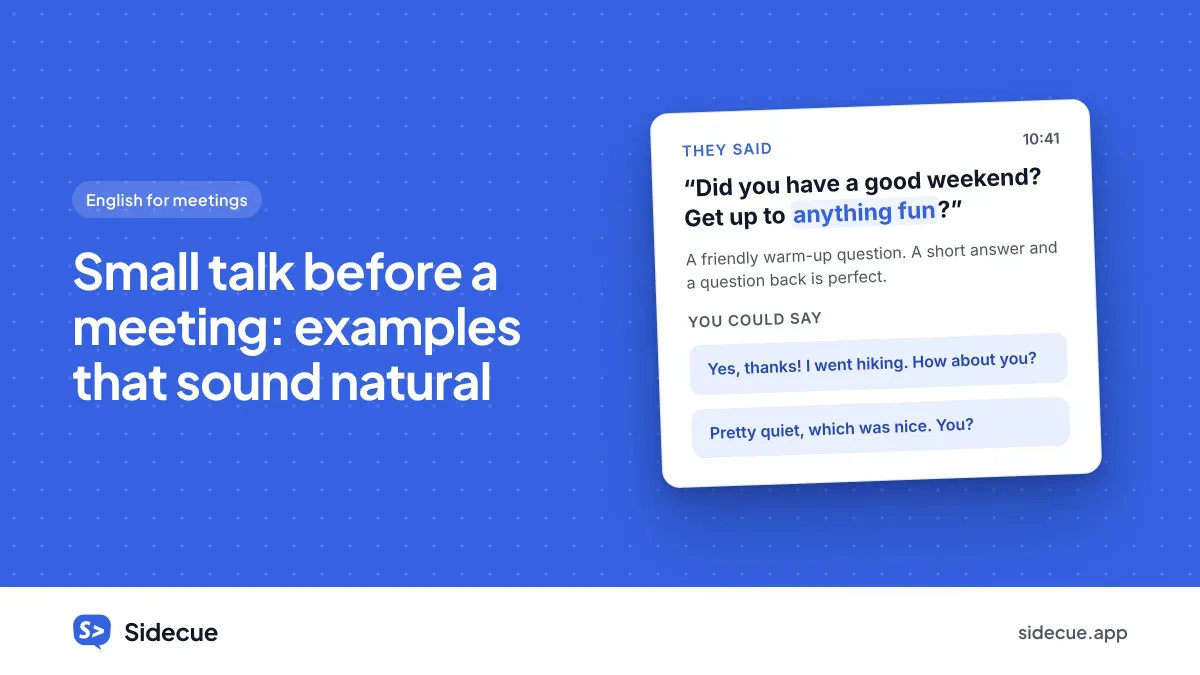
Small talk before a meeting: examples that sound natural
Natural small talk questions and answers for the first minutes of a meeting, safe topics, and how to move smoothly from small talk to business.
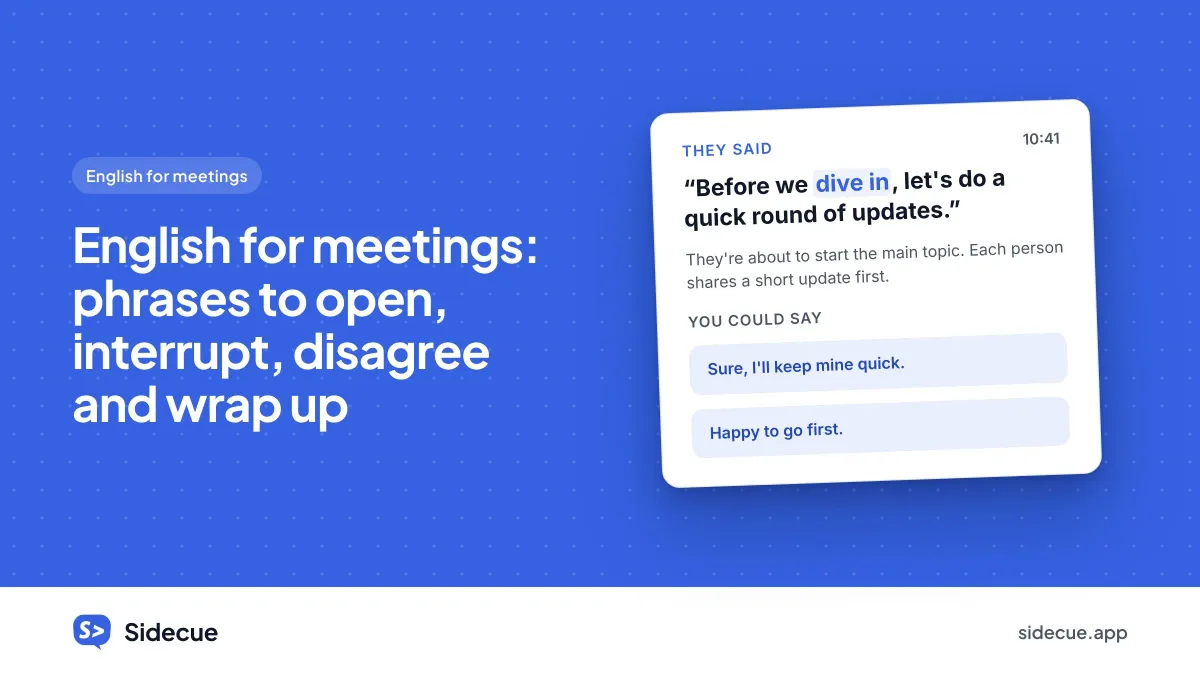
English for meetings: phrases to open, interrupt, disagree and wrap up
Natural English phrases for every part of a meeting: opening, giving updates, interrupting, agreeing, disagreeing politely and wrapping up.