Business idioms you'll hear in meetings, and what they really mean
The business idioms you're most likely to hear in meetings, with plain-English meanings, real examples and natural replies you can use.

Michał Włosik
· 6 min read
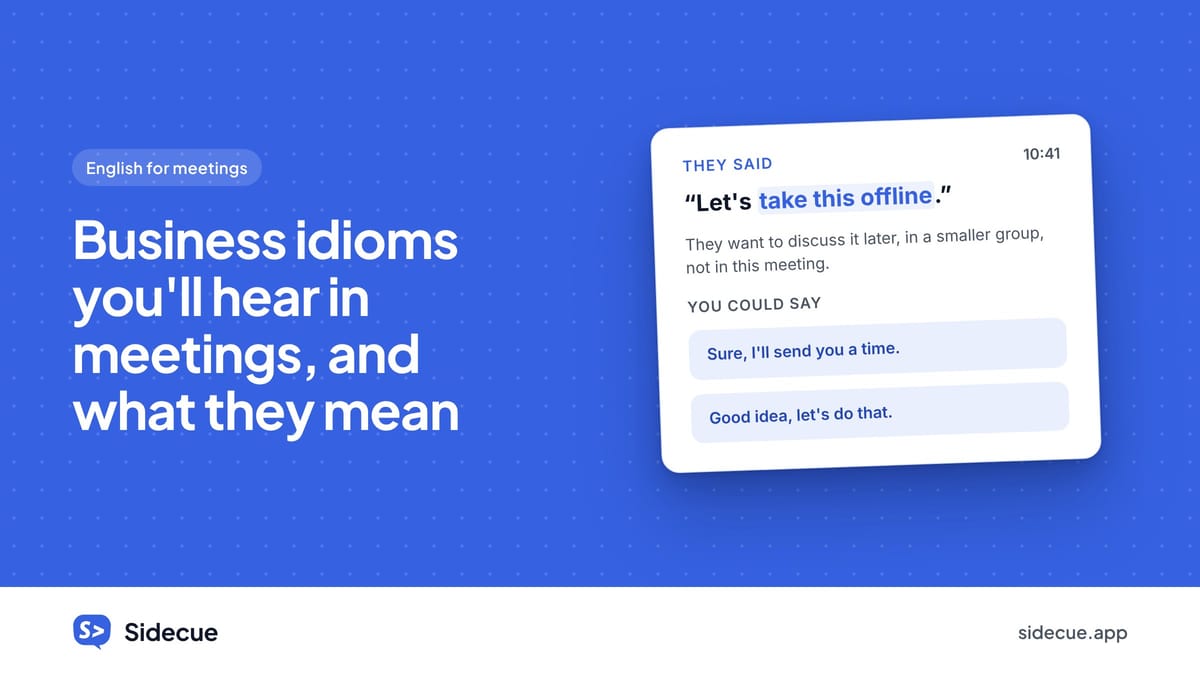
You understand every word. Then someone says “let's take this offline” or “the ball is in your court”, and for a second you're not sure what just happened. That's the problem with business idioms: the words are easy, but the meaning isn't in the words.
Below are the idioms you're most likely to hear in meetings, grouped by when they come up. Each has a plain-English meaning, a real example, and something natural you can say back.
Why idioms are hard in meetings
Reading an idiom is easy: you can stop, look it up and move on. In a meeting you get one chance, at full speed, often with an accent you're not used to. Three things make it harder:
- The meaning isn't in the words. “Ballpark” has nothing to do with sport in “a ballpark figure”.
- They're said fast and casually. Native speakers blend them into the sentence: “canwecirclebackonthat”.
- A reply is expected. “The ball is in your court” is a polite way of asking you to act. Nodding isn't enough.
The good news: meetings reuse the same few dozen idioms again and again. Learn these and you'll recognise most of what you hear.
Scheduling and follow-ups
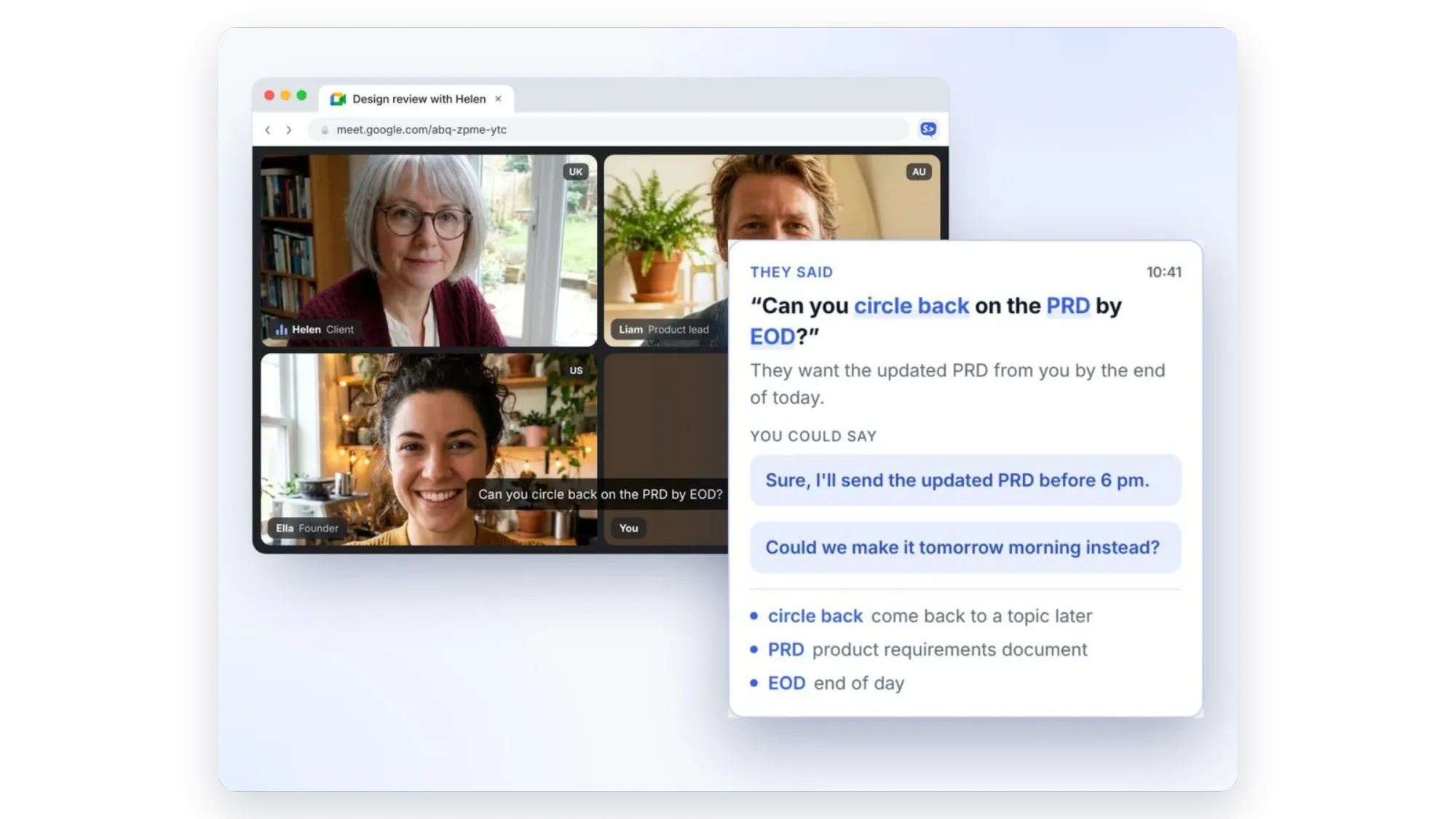
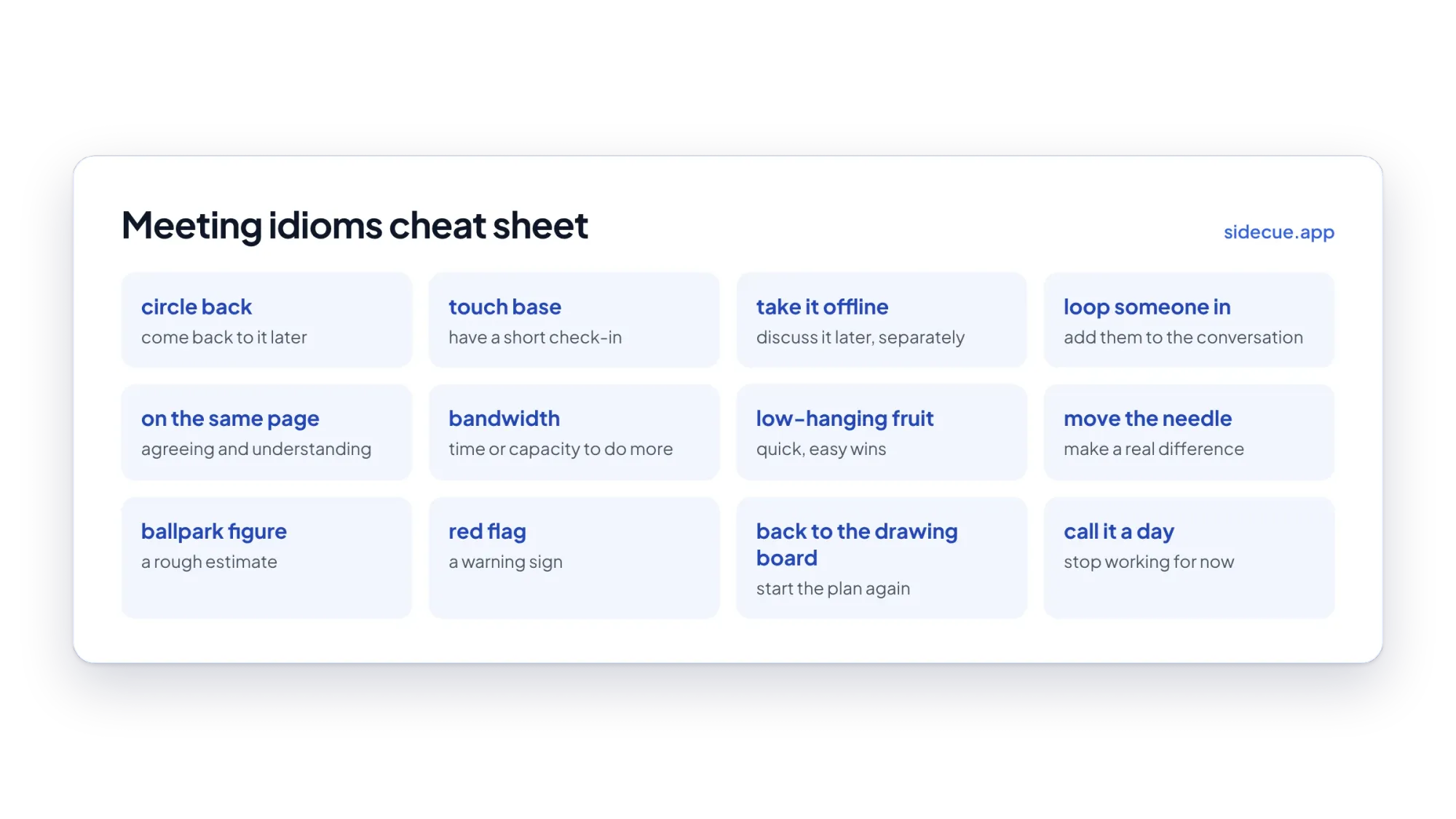
Circle back
Meaning: come back to a topic later.
Example: “Let's circle back on pricing next week.”
You could say: “Sounds good. I'll put it on next week's agenda.”
Touch base
Meaning: have a short check-in.
Example: “Can we touch base on Thursday?”
You could say: “Sure. Does 10 am work for you?”
Take this offline
Meaning: discuss it later, separately, usually with fewer people. It's not about the internet.
Example: “This is getting detailed. Let's take it offline.”
You could say: “Good idea. I'll send you an invite.”
Loop someone in
Meaning: add someone to the conversation or the email thread.
Example: “Can you loop in Sarah from legal?”
You could say: “Will do. I'll copy her on the follow-up.”
Ping
Meaning: send a short message.
Example: “Ping me if anything changes.”
You could say: “I will, thanks.”
Agreement and alignment
On the same page
Meaning: everyone understands and agrees.
Example: “Before we start, let's make sure we're on the same page.”
You could say: “Good idea. My understanding is that we launch in March.”
See eye to eye
Meaning: agree. Often used in the negative.
Example: “We don't always see eye to eye on design.”
You could say: “That's fair. Where do you see it differently?”
Get buy-in
Meaning: get people to support a plan.
Example: “We need buy-in from finance before we go ahead.”
You could say: “I can present the numbers to them this week.”
Sign off on
Meaning: formally approve.
Example: “Has Tom signed off on the budget?”
You could say: “Not yet. I expect his approval tomorrow.”
Priorities and time
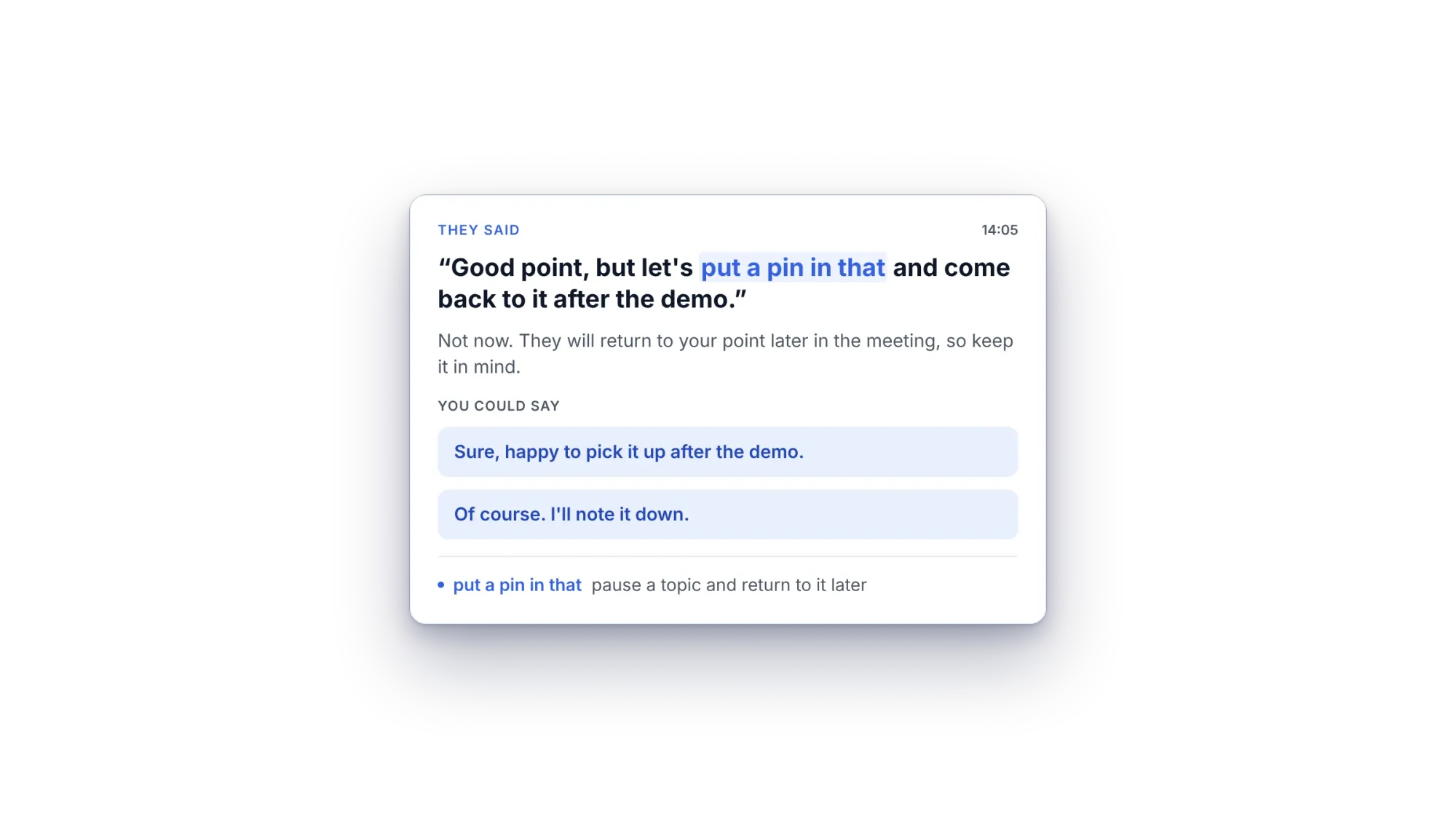
Put a pin in it
Meaning: pause a topic and return to it later.
Example: “Good point, but let's put a pin in that until after the demo.”
You could say: “Of course. I'll note it down.”
Low-hanging fruit
Meaning: easy tasks that bring quick results.
Example: “Let's start with the low-hanging fruit.”
You could say: “Fixing the signup form is probably the quickest win.”
Move the needle
Meaning: make a noticeable difference.
Example: “Will this feature really move the needle?”
You could say: “I think so. It addresses our top support request.”
Bandwidth
Meaning: time or capacity to take on more work.
Example: “Do you have the bandwidth for this?”
You could say: “Not this week, but I could start on Monday.”
Put on the back burner
Meaning: make something a low priority for now.
Example: “We've put the mobile app on the back burner.”
You could say: “Understood. When do you expect to revisit it?”
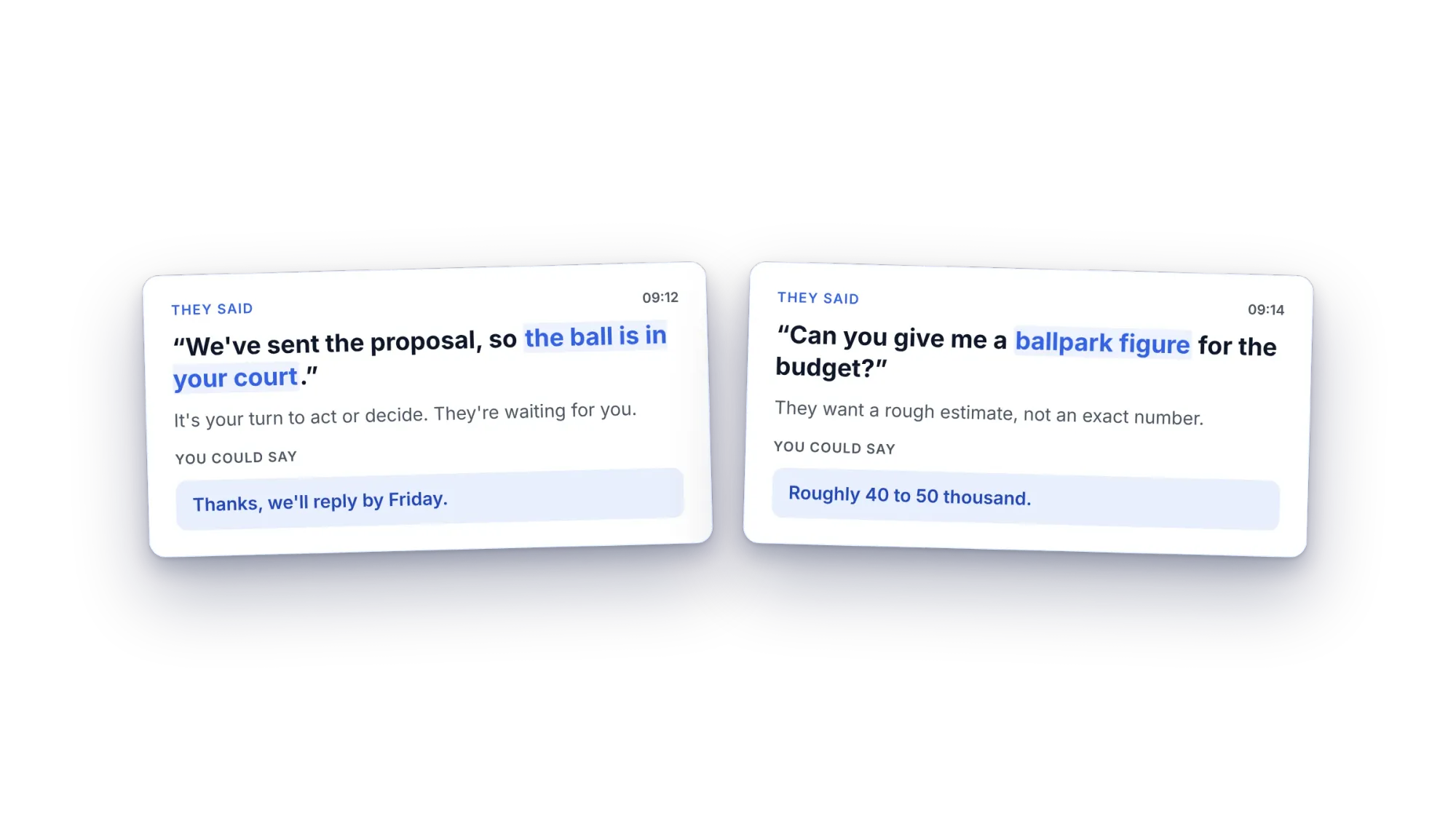
The ball is in your court
Meaning: it's your turn to act or decide.
Example: “We've sent the proposal, so the ball is in your court.”
You could say: “Thanks. We'll get back to you by Friday.”
Numbers, problems and risk
A ballpark figure
Meaning: a rough estimate.
Example: “Can you give me a ballpark figure for the budget?”
You could say: “Roughly 40 to 50 thousand. I'll confirm the exact number by email.”
A red flag
Meaning: a warning sign.
Example: “The delay from the supplier is a red flag.”
You could say: “Agreed. Should we look for a backup supplier?”
Back to the drawing board
Meaning: the plan failed, so start again.
Example: “The client rejected the concept, so it's back to the drawing board.”
You could say: “Let's list what they did like, so we keep it.”
Open a can of worms
Meaning: start something that causes many new problems.
Example: “Changing the contract now would open a can of worms.”
You could say: “Fair. Then let's keep the current terms for this quarter.”
Hit a wall
Meaning: get stuck and stop making progress.
Example: “We've hit a wall with the integration.”
You could say: “What's blocking it? Maybe I can help.”
Wrapping up a meeting
Let's call it a day
Meaning: let's stop for now.
You could say: “Sounds good. Thanks, everyone.”
Action items
Meaning: the tasks people agreed to do.
You could say: “My action item is the updated timeline, by Wednesday.”
Take it from here
Meaning: continue the work without more help.
Example: “Thanks for the intro. I'll take it from here.”
What to do when you don't know the idiom
Even advanced speakers meet new idioms. Asking is normal, and it sounds confident if you ask clearly:
- “Sorry, I'm not familiar with that expression. What do you mean by ‘boil the ocean’?”
- “Just to make sure I understand: you'd like us to pause this for now?”
- “When you say ‘ballpark’, are you looking for a rough range?”
Paraphrasing what you think they meant is often the best option. It shows you followed, and the other person will correct you if needed.
Get help during the call
Lists help before the meeting. During it, there's no time to search. That's what Sidecue's Language coach is for: it listens to your meeting tab in Google Meet, Zoom or Teams and, a few seconds after someone speaks, shows their exact words, what they really meant, idioms explained at your level, and phrases you could say back. You can even read the explanations in your own language.
It runs in Chrome, no bot joins your call, and the free plan includes 30 minutes a month. Try it first in a practice call, before the real thing.
Add Sidecue to Chrome for free
FAQ
Are business idioms too informal to use myself?
Most of the idioms here are normal in everyday meetings, even with clients. Start by understanding them; use them yourself once they feel natural. Plain English is always fine.
Are these idioms the same in British and American English?
Most are used in both. A few are more American, such as “ballpark figure” and “touch base”, but you'll hear them in international teams everywhere.
What's the fastest way to learn them?
Learn them in context. Notice an idiom in a real meeting, write down the sentence, and use it once yourself that week. Sidecue's Phrases page keeps the expressions from your calls so you can review them later.
Written by
Questions or thoughts? Share them below.
Keep reading
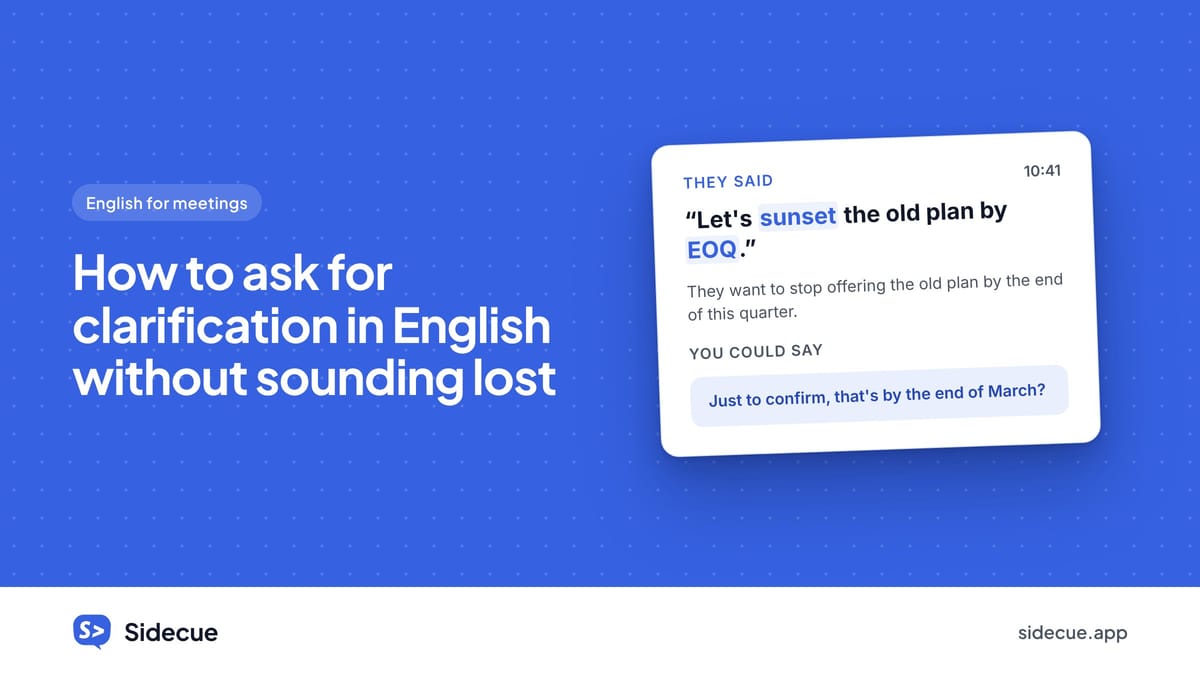
How to ask for clarification in English without sounding lost
Natural English phrases to ask for clarification in meetings: when you didn't hear, don't know a word, or want to check what someone meant.
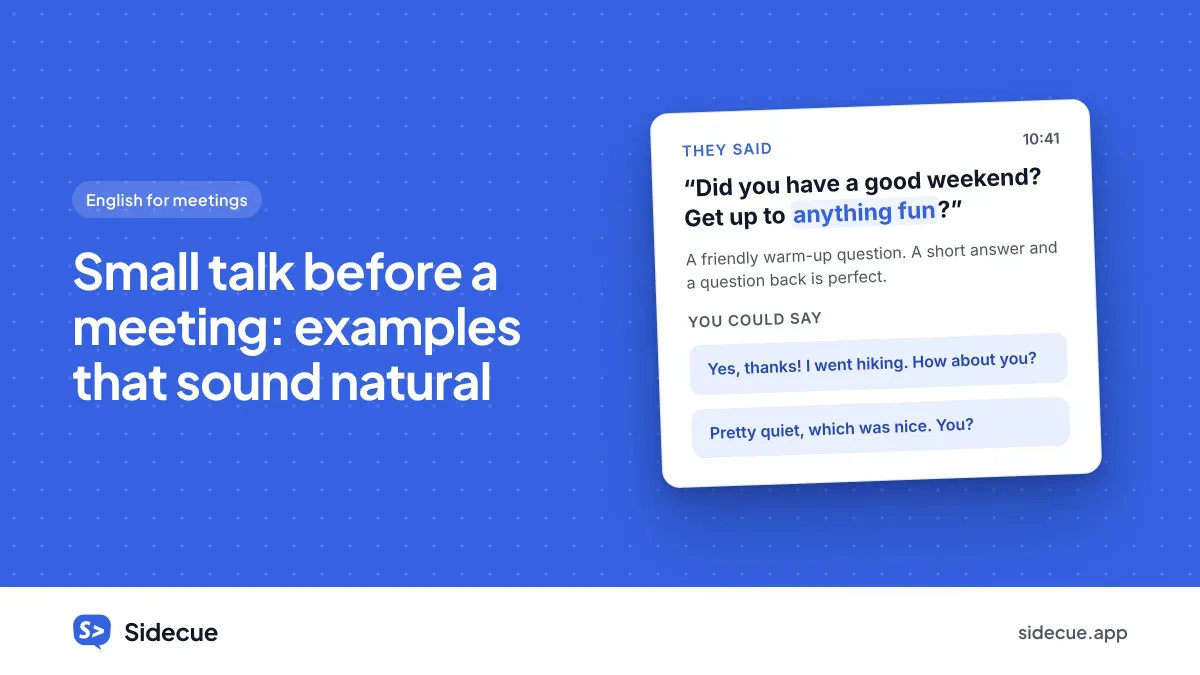
Small talk before a meeting: examples that sound natural
Natural small talk questions and answers for the first minutes of a meeting, safe topics, and how to move smoothly from small talk to business.
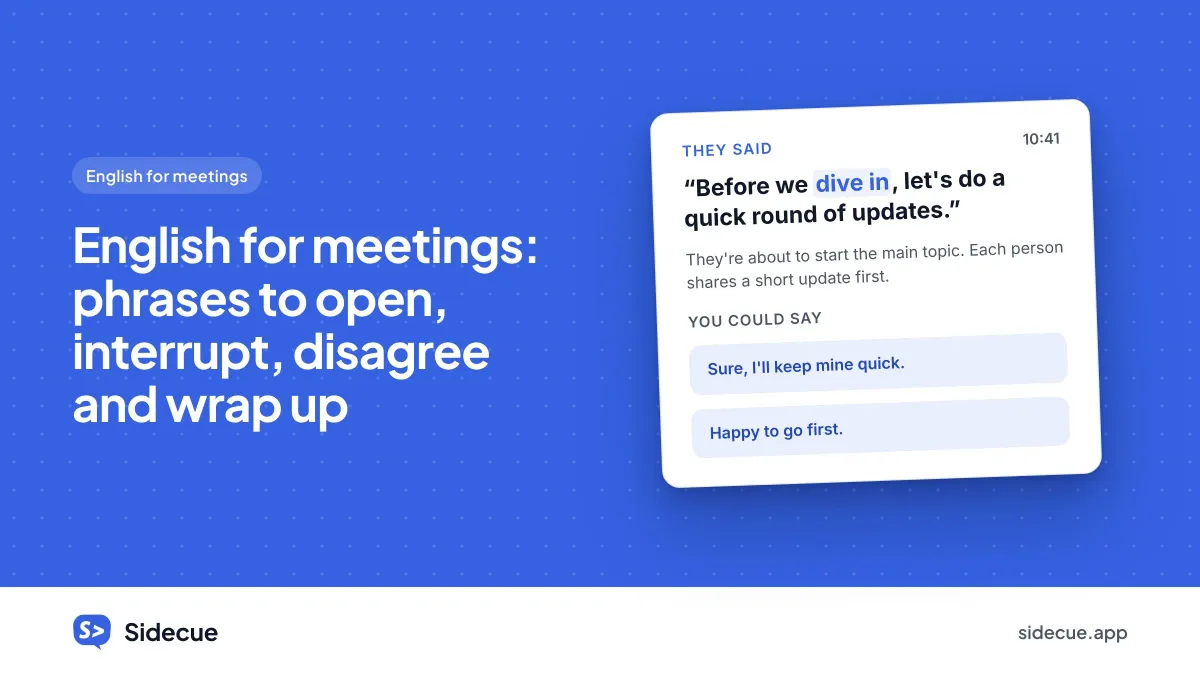
English for meetings: phrases to open, interrupt, disagree and wrap up
Natural English phrases for every part of a meeting: opening, giving updates, interrupting, agreeing, disagreeing politely and wrapping up.